
Guide
Alcohol Withdrawal Seizures and DTs: The First 96 Hours
Joint Commission accredited · In network with most major insurance · Admissions answered 24 hours a day


Published August 21, 2026
Most withdrawal is miserable without being dangerous. Alcohol is one of the two exceptions.
Stopping heavy drinking can cause seizures, and in a smaller number of people it causes delirium tremens. Both are medical emergencies. Both happen on a rough schedule, which is the single most useful thing to know if you are deciding what to do this week.
Why Is Alcohol Withdrawal Different From Other Withdrawal?
Alcohol and benzodiazepines are the two drugs where the withdrawal itself can kill you. Opioid withdrawal is severe and rarely fatal on its own. Alcohol withdrawal is different because of what long-term drinking does to the brain.
Heavy drinking suppresses the central nervous system for months or years. The brain adapts by turning its own excitatory signaling up to compensate. Remove the alcohol suddenly and that compensation is left running unopposed, which is what produces tremor, then seizures, then in some cases delirium. The National Institute on Alcohol Abuse and Alcoholism describes this as a physical dependence, not a failure of resolve.
That is also why alcohol detox is a medical procedure rather than a waiting game.
When Do Alcohol Withdrawal Seizures Start?
Withdrawal symptoms usually begin 6 to 24 hours after the last drink. Seizures, when they happen, most often occur in the first 48 hours.
The risky part is that the first 24 hours can feel manageable. Tremor, sweating, nausea and anxiety arrive early and look like a bad hangover. A seizure can follow while a person still believes they are getting through it.
A withdrawal seizure is typically generalized and brief. One can occur without warning and without any prior history of epilepsy.
Where we are
Detox centers across Texas
Three locations, each with its own admissions line and its own clinical team. Pick the one nearest you — or call and we will tell you which has a bed tonight.
-
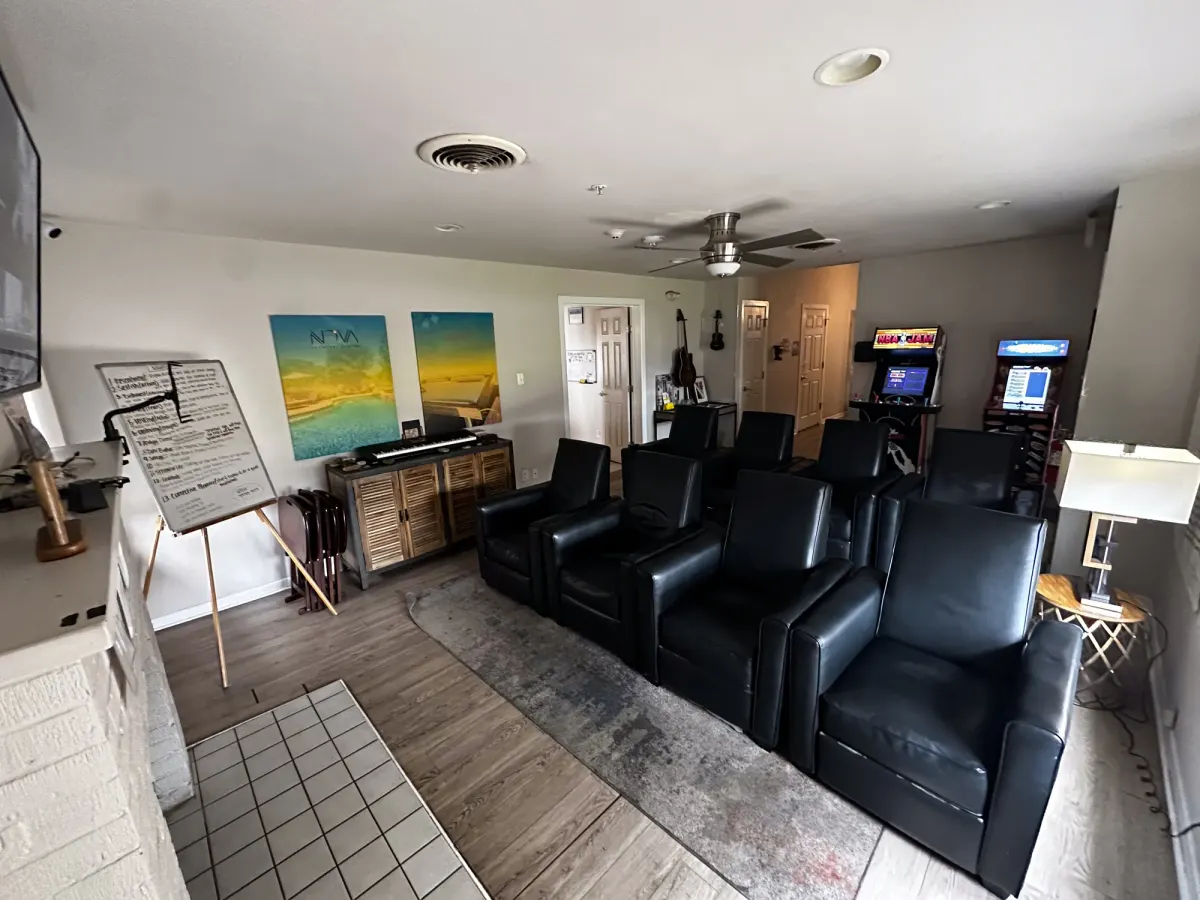 Inpatient
 Austin, TX
11711 N Lamar Blvd · 78753
- 15 beds
- On-site labs
- 24-hour medical staff
Drug & Alcohol Detox in Austin, TX
-
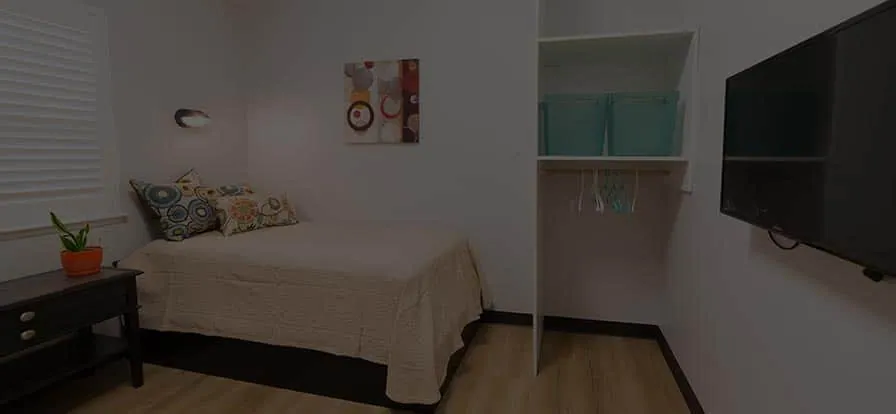 Inpatient
 Houston, TX
1019 Ashland St · 77008
- On-site labs
- 24-hour medical staff
Drug Detox Center in Houston, TX
-
 Outpatient
 San Antonio, TX
6707 W Hausman Rd · 78249
- Outpatient detox with scheduled medical visits
- Outpatient treatment
Outpatient Drug & Alcohol Detox in San Antonio
What Is Delirium Tremens?
Delirium tremens, usually shortened to DTs, is a state of acute confusion with an overactive autonomic nervous system. It generally appears later than seizures, most often 48 to 96 hours after the last drink.
It is not the same as being shaky or agitated. DTs involves disorientation, hallucinations, a racing heart, high blood pressure and fever. MedlinePlus lists it as a medical emergency requiring hospital treatment.
Only a minority of people in alcohol withdrawal develop DTs. The problem is that nobody can tell you in advance which minority you belong to.
Who Is Most at Risk?
Risk is higher for people with:
- a previous withdrawal seizure or a previous episode of DTs
- many years of daily heavy drinking
- previous detoxes, especially several of them
- older age, or another serious medical condition
- an untreated infection or injury at the same time
- benzodiazepine use alongside alcohol
The second and third points together describe something clinicians call kindling. Each unmedicated withdrawal tends to make the next one worse, which means a person who has detoxed at home three times is not starting from where they started the first time.
Why Is This So Hard to Predict at Home?
Because the useful signals are numbers, and nobody takes their own blood pressure hourly at 3am.
In a medical setting, withdrawal is scored on a scale at regular intervals, and vital signs are trended rather than glanced at. A rising heart rate over four hours means something that a single reading does not. That trend is what triggers medication before a seizure rather than after one.
At home there is no trend, no scoring and no medication. There is a person guessing, usually the person withdrawing.
What Does Medical Detox Actually Do About It?
Three things, and none of them are complicated.
It monitors. Nursing staff check vitals and symptom scores around the clock, so a deterioration is caught while it is still a change in numbers.
It medicates on a protocol. Benzodiazepines are the standard treatment for alcohol withdrawal, given on a schedule or in response to symptom scores, which both treats the symptoms and lowers seizure risk.
It escalates. A detox center that recognizes DTs sends that person to a hospital, because DTs is treated in a hospital.
That is what round-the-clock withdrawal management means in practice, and what to expect from our detox covers the rest of the admission.
When Should Someone Call 911?
Call emergency services, not a detox center, if a person in withdrawal has:
- a seizure of any length
- confusion about where they are or who you are
- a fever, or chest pain
- repeated vomiting with no ability to keep fluids down
- hallucinations
A detox center can admit someone in early withdrawal. It cannot treat a seizure in progress.
Common Questions
How long after my last drink am I out of the seizure window?+–
Seizure risk is concentrated in the first 48 hours, and delirium tremens can begin as late as 96 hours. Being past four days without either is meaningfully safer, but symptoms such as insomnia and anxiety often continue for weeks.
Can I detox from alcohol at home if I only drink beer?+–
The type of drink does not change the risk, because the risk comes from total alcohol intake over time. A person drinking a large volume of beer daily for years can be more physically dependent than an occasional spirits drinker.
Will I definitely have a seizure if I stop drinking?+–
No. Most people in alcohol withdrawal do not have a seizure. The difficulty is that the risk cannot be ruled out beforehand, which is why supervision is recommended rather than reassurance.
Does tapering my own drinking avoid the danger?+–
A slow self-managed reduction is safer than stopping abruptly, but it depends on being able to hold to a schedule while in withdrawal, which is the thing dependence makes hardest. A medically supervised taper does not rely on that.
I have detoxed before and was fine. Does that mean I am safe this time?+–
Not necessarily. Repeated withdrawals are associated with worsening symptoms each time, so a previous uncomplicated detox is not a prediction about the next one.
What if I am also taking Xanax or Klonopin?+–
Tell the admissions nurse before you arrive. Combined alcohol and benzodiazepine dependence changes the medication plan, and stopping both at once without supervision is more dangerous than either alone.
Related guides


About the people behind this guide
Anna-Grace Washington
Medical Content Writer
Anna-Grace Washington is a Medical Content Writer for Briarwood Detox Center. She holds a master’s degree in clinical psychology from the University of Texas and brings a strong understanding of behavioral health, addiction recovery, and evidence-based treatment concepts to her writing.
Dr. Robert Ulrich, DO
Medical Director
Dr. Robert Ulrich serves as Medical Director at Briarwood Detox Center, bringing more than two decades of clinical neurology experience to the treatment of substance use disorders. He is board-certified in neurology by the American Board of Psychiatry and Neurology and completed his neurology residency at UT Southwestern Medical Center in Dallas, where he served as Chief Resident.
In network with most major insurance
Find your plan and see what detox would cost
Most plans cover medical detox. Coverage varies by plan, so we verify it for you before you commit to anything.



















Don't see your plan? We work with out-of-network benefits and offer self-pay options — (866) 710-7710
- Confidential
- Takes about 2 minutes
- No obligation to admit

- Accredited The Joint Commission
- Rated 4.7 · 183 Google reviews Flourishing Foundations Recovery, now part of Briarwood
- Admissions 24 hours a day