
Guide
7-OH Withdrawal: What to Expect and When to Get Help
Joint Commission accredited · In network with most major insurance · Admissions answered 24 hours a day


Published August 20, 2026
Most people who end up in withdrawal from 7-OH did not think they were taking an opioid. They bought a tablet or a shot at a counter, legally, alongside the energy drinks — and then found they could not stop without getting sick.
That reaction is not a surprise once you know what the product is. It is the same withdrawal a short-acting opioid produces, and it responds to the same medical care.
What 7-OH Actually Is
7-OH is short for 7-hydroxymitragynine. It occurs naturally in the kratom plant, but only in trace amounts. The products now sold as “7-OH” — tablets, gummies, liquid shots — are concentrated or semi-synthetic, which means the amount reaching the body has little in common with brewed kratom leaf.
What matters clinically is where it acts. 7-OH is a strong agonist at the mu-opioid receptor, the same receptor morphine and oxycodone act on. Regular use produces physical dependence for the same reason those drugs do, and stopping produces the same class of withdrawal.
Being sold openly is not evidence that a substance is mild. It is the single most common reason people we admit did not see the dependence coming.
What Withdrawal Feels Like
7-OH behaves like a short-acting opioid, so withdrawal tends to arrive quickly and hit hard rather than build slowly.
- Restlessness and anxiety, often the first thing people notice, and often mistaken for stress
- Sleep loss, which compounds everything else and is usually the symptom that lasts longest
- Muscle aches, cramping and joint pain, sometimes severe enough to make sitting still difficult
- Sweating, chills and goosebumps, frequently cycling within the same hour
- Runny nose and watery eyes, which is why the early hours are often mistaken for flu
- Nausea, vomiting, diarrhea and abdominal cramping, the symptoms that create the real medical risk
- Cravings, which get stronger as the physical symptoms peak
The Usual Timeline
Timelines vary with how much, how long, how often, and what else is in the picture. As a general pattern for a short-acting opioid:
- 6 to 12 hours after the last dose, early symptoms begin
- Day 1 to day 3 is typically the peak
- About a week for the acute physical symptoms to settle
- Weeks after that for sleep, mood and cravings, which do not track the physical timeline
The last line is the one worth planning around. People often expect to feel finished when the vomiting stops, and then read the weeks that follow as failure rather than as the ordinary shape of recovery.
When It Needs Medical Supervision
Opioid-type withdrawal is not usually life-threatening by itself. That framing has done real harm, because it gets read as “safe to tough out,” and two things about it are genuinely dangerous.
The first is fluid loss. Sustained vomiting and diarrhea cause dehydration and electrolyte disturbance, and those can become medical emergencies — particularly for someone older, pregnant, or managing heart, kidney or liver conditions.
The second is what happens after stopping. Tolerance falls within days. A return to a previously ordinary amount, at reduced tolerance, is how overdoses happen — and with concentrated 7-OH, the amount per tablet is not something a person can reliably judge.
Withdrawal also rarely arrives alone. Alcohol or benzodiazepines alongside 7-OH change the risk completely, because those withdrawals *can* be dangerous on their own and need medical management regardless.
Where we are
Detox centers across Texas
Three locations, each with its own admissions line and its own clinical team. Pick the one nearest you — or call and we will tell you which has a bed tonight.
-
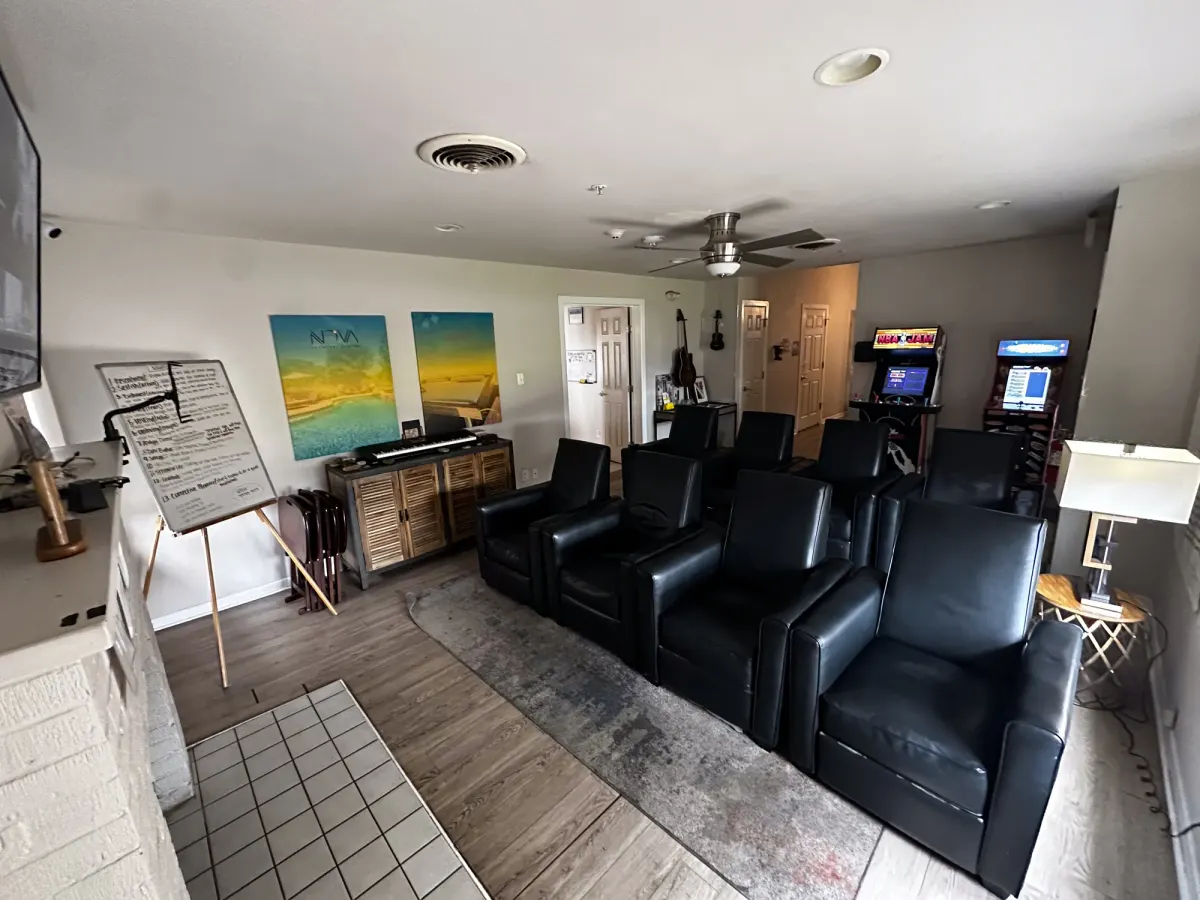 Inpatient
 Austin, TX
11711 N Lamar Blvd · 78753
- 15 beds
- On-site labs
- 24-hour medical staff
Drug & Alcohol Detox in Austin, TX
-
 Inpatient
 Houston, TX
1019 Ashland St · 77008
- On-site labs
- 24-hour medical staff
Drug Detox Center in Houston, TX
-
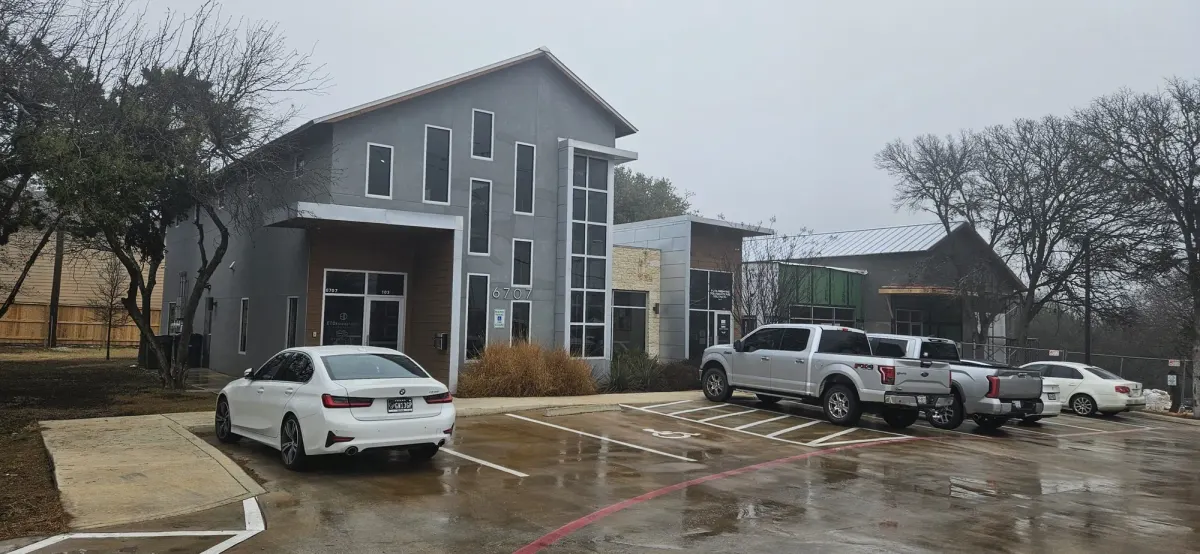 Outpatient
 San Antonio, TX
6707 W Hausman Rd · 78249
- Outpatient detox with scheduled medical visits
- Outpatient treatment
Outpatient Drug & Alcohol Detox in San Antonio
What Medical Detox Involves
Briarwood admits and detoxes 7-OH and kratom dependence. In practice that means:
- An honest assessment first — what you are taking, how much, how long, and what else is going on medically. Concentrated 7-OH products are inconsistently labeled, so this is a conversation rather than arithmetic.
- Monitoring through the peak, so medication decisions follow what is actually happening rather than an estimate made on day one.
- Treatment for the individual symptoms — nausea, cramping, aches, sleep — rather than waiting them out.
- Fluids when vomiting and diarrhea have already done their damage.
- Medication-assisted treatment when it is clinically appropriate, discussed with you rather than assumed.
- A plan for what comes next, arranged before discharge. Detox handles the withdrawal. It does not by itself address what made the substance necessary.
Where the Law Currently Stands
As of August 2026, concentrated 7-OH is not a federally scheduled substance, but that is actively changing.
On July 6, 2026, the DEA published a Notice of Intent to place 7-OH above a specified threshold into Schedule I on a temporary basis, along with three related synthetic compounds. The notice stated that a temporary scheduling order could be published in the Federal Register on or after August 5, 2026, and would take effect on the day it publishes.
What to watch for, and when. The order can publish any day from August 5, 2026 onward — there is no fixed date, and it becomes law the day it appears rather than after the usual notice period. Once it does, it holds for two years, extendable by one more while permanent scheduling is considered. The threshold matters as much as the ban: the proposal covers 7-OH above 0.05% of the article, or more than 1 mg per tablet, gummy or shot, which is where concentrated products sit and ordinary kratom leaf does not. The DEA’s Notice of Intent in the Federal Register is the authoritative place to check whether it has taken effect.
Check the current status before relying on this paragraph. It is included because the legal question is the one people ask first, and because a product being available today says nothing about whether it causes dependence — nor does a product becoming illegal change what withdrawal from it requires.
Common Questions
Is 7-OH the same thing as kratom?+–
No. 7-OH is one alkaloid found in trace amounts in the kratom plant. Products sold as 7-OH are concentrated or semi-synthetic, so the exposure is far higher than brewed kratom leaf. Dependence and withdrawal are correspondingly more pronounced.
How long does 7-OH withdrawal last?+–
Acute physical symptoms usually begin 6 to 12 hours after the last dose, peak between day one and day three, and settle over roughly a week. Sleep disturbance, low mood and cravings commonly continue for weeks afterward and are not a sign that something has gone wrong.
Is 7-OH withdrawal dangerous?+–
Opioid-type withdrawal is not usually life-threatening on its own, but dehydration from prolonged vomiting and diarrhea can be, and reduced tolerance after stopping raises overdose risk on any return to use. If alcohol or benzodiazepines are also involved, withdrawal needs medical management regardless.
Can I stop taking 7-OH on my own?+–
Some people do. The reasons to have medical support are the ones above -- fluid loss, other substances in the picture, existing health conditions, and the tolerance drop that follows stopping. A conversation about your situation is the way to answer this, not a general rule.
Does Briarwood treat 7-OH and kratom dependence?+–
Yes. We admit and medically detox both. If you are not sure whether what you are taking counts, call and describe it -- that is a normal question and it does not need a diagnosis first.
If you are reading this while deciding whether your situation is serious enough to call: describing what you are taking to someone who can tell you costs nothing, and it is the fastest way to find out. See opiate and opioid detox for how medically supervised opioid withdrawal works here.
Related guides



About the people behind this guide
Anna-Grace Washington
Medical Content Writer
Anna-Grace Washington is a Medical Content Writer for Briarwood Detox Center. She holds a master’s degree in clinical psychology from the University of Texas and brings a strong understanding of behavioral health, addiction recovery, and evidence-based treatment concepts to her writing.
Dr. Robert Ulrich, DO
Medical Director
Dr. Robert Ulrich serves as Medical Director at Briarwood Detox Center, bringing more than two decades of clinical neurology experience to the treatment of substance use disorders. He is board-certified in neurology by the American Board of Psychiatry and Neurology and completed his neurology residency at UT Southwestern Medical Center in Dallas, where he served as Chief Resident.
In network with most major insurance
Find your plan and see what detox would cost
Most plans cover medical detox. Coverage varies by plan, so we verify it for you before you commit to anything.



















Don't see your plan? We work with out-of-network benefits and offer self-pay options — (866) 710-7710
- Confidential
- Takes about 2 minutes
- No obligation to admit
- Accredited The Joint Commission
- Rated 4.7 · 183 Google reviews Flourishing Foundations Recovery, now part of Briarwood
- Admissions 24 hours a day