
Guide
AA Meetings Near Me in Austin: How to Find One Tonight and What Happens When You Walk In
Joint Commission accredited · In network with most major insurance · Admissions answered 24 hours a day


Published September 12, 2026
If you are searching for an AA meeting near you in Austin, you probably want one today, not a history of the fellowship. So the first section is how to find one in the next few minutes, the middle is what will happen when you get there, and the end is the one situation where a meeting is not the first call to make.
How do you find an AA meeting near you in Austin tonight?
Call Hill Country Intergroup, Austin’s AA central office, at 512-444-0071, which is answered 24 hours a day, or use their meeting finder at austinaa.org, which lists upcoming meetings by distance from where you are.
Hill Country Intergroup is the office that serves Travis County and the surrounding counties, and its meeting finder is the current, maintained list: filter by “upcoming” and “near me” and it shows what is starting soonest and closest. The hotline is staffed by AA members who will tell you which meeting fits, whether it is open or closed, and, if you ask, whether someone can meet you at the door. There are meetings in Austin every day, morning, noon and night, and in most parts of the city you are within a short drive of one starting in the next few hours.
Meeting Guide, the free AA app for iPhone and Android, pulls from the same local listings, so it shows the same Austin meetings on a map.
Source: Hill Country Intergroup, Austin Alcoholics Anonymous, 24-hour hotline 512-444-0071.
What happens at an AA meeting the first time you go?
An AA meeting is a group of people who have stopped drinking, or are trying to, talking about how they did it, and a newcomer can sit, listen and say nothing at all.
Most meetings run about an hour. Someone opens with a short reading, a speaker or a topic is introduced, and people share in turn if they want to. Nobody will make you talk. If you are asked to introduce yourself, “I’m here for the first time” is a complete answer and usually gets a warm response, because everyone in the room had a first time. Coffee is normal, hugging is optional, and leaving early is allowed. You do not need to have stopped drinking already. AA’s Third Tradition says it in one line: the only requirement for membership is a desire to stop drinking.
Source: The Twelve Traditions, Alcoholics Anonymous World Services.
What is the difference between an open and a closed AA meeting?
Open meetings are for anyone who wants to attend, including family, friends and people who are just curious, while closed meetings are for people who have a drinking problem or think they might.
That distinction matters twice for a newcomer. If you are not sure you belong, a closed meeting is still yours to attend, because thinking you might have a problem is the qualification. And if you want to bring someone with you for the first one, choose an open meeting. The Austin meeting finder marks each meeting’s type, and the hotline will tell you. Many meetings also carry labels like “big book,” “speaker,” “beginners” or “women’s,” which describe the format rather than who is allowed in; a beginners’ meeting is the easiest first one.
Where we are
Detox centers across Texas
Three locations, each with its own admissions line and its own clinical team. Pick the one nearest you — or call and we will tell you which has a bed tonight.
-
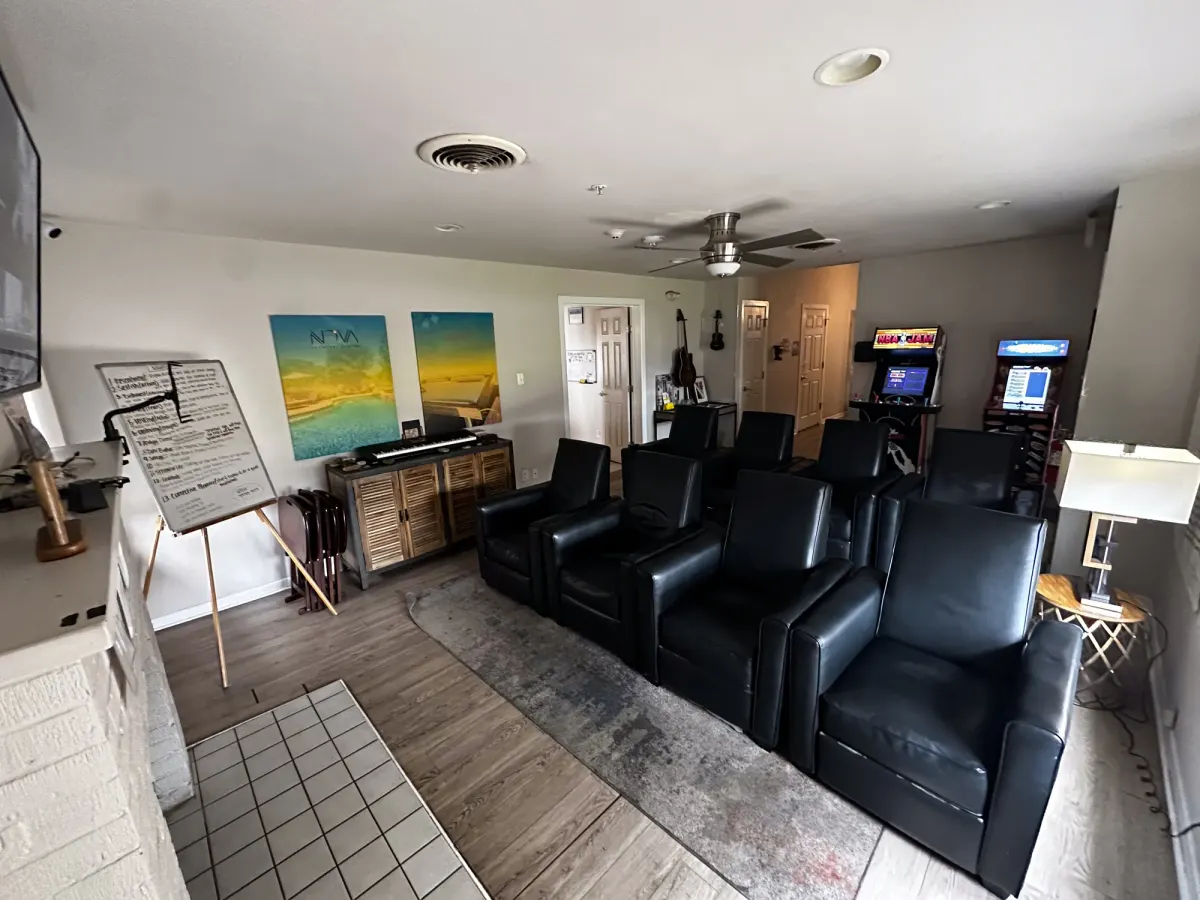 Inpatient
 Austin, TX
11711 N Lamar Blvd · 78753
- 15 beds
- On-site labs
- 24-hour medical staff
Drug & Alcohol Detox in Austin, TX
-
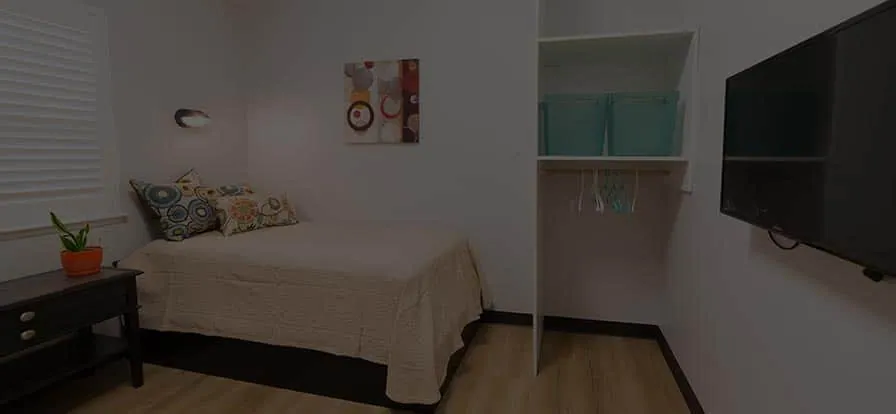 Inpatient
 Houston, TX
1019 Ashland St · 77008
- On-site labs
- 24-hour medical staff
Drug Detox Center in Houston, TX
-
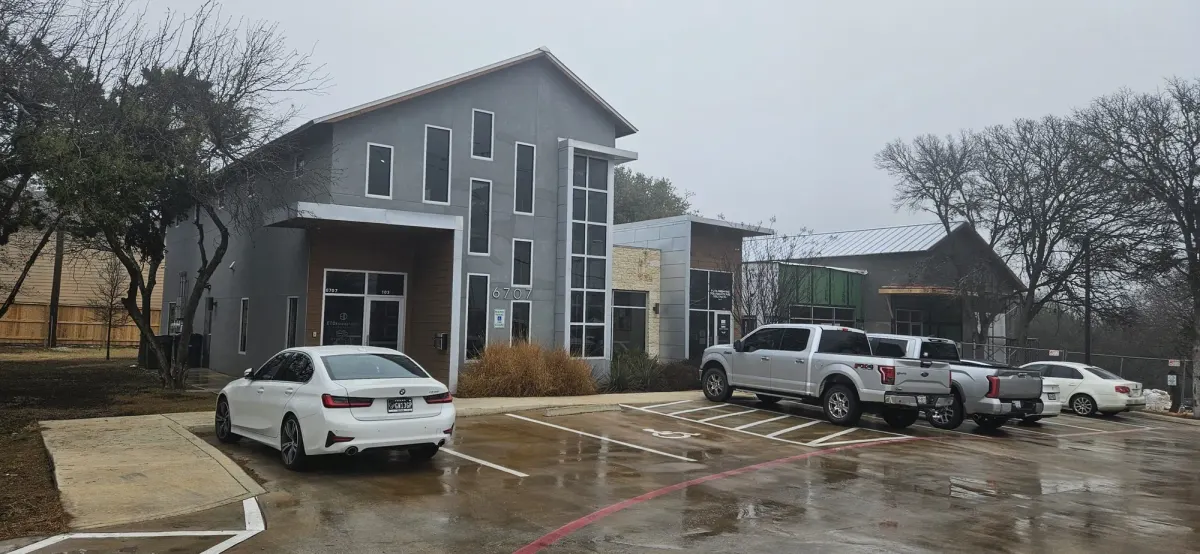 Outpatient
 San Antonio, TX
6707 W Hausman Rd · 78249
- Outpatient detox with scheduled medical visits
- Outpatient treatment
Outpatient Drug & Alcohol Detox in San Antonio
Does AA cost anything?
No. There are no dues or fees for AA membership, and a basket passed during the meeting for a voluntary dollar or two toward rent and coffee is the only money involved.
Nobody tracks what you put in or whether you put in anything. AA’s Seventh Tradition is that every group is fully self-supporting and declines outside contributions, which is also why there is no sign-up, no intake form and no insurance to check. You walk in.
Are there online AA meetings if you cannot get to one in person?
Yes. The Online Intergroup of Alcoholics Anonymous keeps a directory of online meetings running at every hour, and Hill Country Intergroup lists the Austin meetings that meet by video or as hybrid.
The online directory at aa-intergroup.org/meetings is built around the question “what is happening right now,” which is the question at 2 a.m. Video meetings work the same way as in-person ones: you can keep your camera off, use a first name only, and just listen. They are a reasonable first meeting for someone who is anxious about walking into a room, and a reasonable stand-in when there is no ride. Most people who stay find that an in-person home group matters more over time, and the online rooms are honest about saying so.
Source: Online Intergroup of Alcoholics Anonymous, meeting directory.
When is an AA meeting the wrong first step?
An AA meeting is the wrong first step when you are a heavy daily drinker who has just stopped, or is about to. Alcohol withdrawal is a medical event, and a church basement is not equipped for it.
This is the part no meeting-finder page tells you. Withdrawal typically begins within hours of the last drink and peaks around 72 hours. Withdrawal seizures typically occur between 8 and 48 hours, and delirium tremens can appear from day three to day eight. AA members will tell you the same thing, because many of them detoxed medically before their first meeting and the fellowship does not pretend to be a hospital. If stopping brings on shaking, sweating, a racing heart or worse, the sequence is medically supervised detox first, usually five to seven days, and the meetings after, when you can sit through one. The first 96 hours page explains who is most at risk.
If that is not you, if you can stop without your body reacting badly, then the meeting tonight is exactly the right first step, and this page has nothing more to add except go.
Source: Alcohol Withdrawal Syndrome, StatPearls, National Library of Medicine.
How do AA meetings fit with detox and treatment in Austin?
AA meetings fit around treatment rather than replacing it: detox handles the withdrawal, outpatient treatment handles the weeks after, and meetings are the free, permanent structure that outlasts both.
At Briarwood, people leaving detox in Austin are connected to meetings before discharge, and intensive outpatient treatment is built to run alongside them, several sessions a week while living at home. The 30 days sober page explains why the first month is when structure matters most. For the steps themselves, the free step worksheets on this site are the ones people work with a sponsor, and they are printable without giving anyone your email.
The practical version: find the meeting tonight, and if you cannot sit through it because your body is in withdrawal, call us instead and we will get you to the point where you can.
Common Questions
How do I find an AA meeting in Austin right now?+–
Call Hill Country Intergroup at 512-444-0071, answered 24 hours a day, or open the meeting finder at austinaa.org and filter to upcoming meetings near you. The Meeting Guide app shows the same list on a map.
Do I have to talk at an AA meeting?+–
No. Newcomers can listen and say nothing. If asked to introduce yourself, saying it is your first meeting is enough.
Can I go to AA if I am still drinking?+–
Yes. The only requirement for membership is a desire to stop drinking. If you drink heavily every day, get a medical opinion on withdrawal before stopping abruptly, because that part can be dangerous.
Is AA free?+–
Yes. There are no dues or fees. A voluntary basket contribution covers the room and the coffee, and nobody checks whether you gave.
Should I go to detox or an AA meeting first?+–
If stopping drinking brings on shaking, sweating, a racing heart, or you have had withdrawal seizures before, detox first. Otherwise, the meeting. A nurse at Briarwood can tell you which applies in one call, at any hour.
Related guides


About the people behind this guide
Anna-Grace Washington
Medical Content Writer
Anna-Grace Washington is a Medical Content Writer for Briarwood Detox Center. She holds a master’s degree in clinical psychology from the University of Texas and brings a strong understanding of behavioral health, addiction recovery, and evidence-based treatment concepts to her writing.
Dr. Robert Ulrich, DO
Medical Director
Dr. Robert Ulrich serves as Medical Director at Briarwood Detox Center, bringing more than two decades of clinical neurology experience to the treatment of substance use disorders. He is board-certified in neurology by the American Board of Psychiatry and Neurology and completed his neurology residency at UT Southwestern Medical Center in Dallas, where he served as Chief Resident.
In network with most major insurance
Find your plan and see what detox would cost
Most plans cover medical detox. Coverage varies by plan, so we verify it for you before you commit to anything.


















Don't see your plan? We work with out-of-network benefits and offer self-pay options — (866) 710-7710
- Confidential
- Takes about 2 minutes
- No obligation to admit

- Accredited The Joint Commission
- Rated 4.5 · 95 Google reviews
- Admissions 24 hours a day