
Guide
First-Time LSD Use: The Risks and the Warning Signs
Joint Commission accredited · In network with most major insurance · Admissions answered 24 hours a day


Published August 20, 2026
This is not a guide to using LSD, and it does not tell anyone how to. It is what a detox provider sees when a first experience goes wrong, written for the person weighing it up and for whoever is worried about them.
Most first experiences do not end in an emergency room. The ones that do tend to share a small number of features, and every one of them is knowable in advance.
What Raises the Risk, Specifically
- Psychiatric medication. This is the one most often missed. LSD acts on the serotonin system, and so do SSRIs, SNRIs and lithium. Anyone taking one of these is in a different risk category, and it is a question for a prescriber rather than a friend.
- A personal or family history of psychosis or bipolar disorder. Where that history exists, the risk is not the same as it is for someone without it, and a first experience is a poor time to discover the difference.
- Being alone, or somewhere unfamiliar. A large share of the physical harm is injury, and injury depends on surroundings more than on the substance.
- Anything else in the mix. Alcohol and stimulants alongside it change the picture. Combining substances is the single most common thread in the presentations that turn serious.
The Part Nobody Can Assess in Advance
Two things are unknowable to the person holding it, and no amount of care changes that.
Whether it is LSD at all. Substances sold as acid are sometimes something else. The NBOMe compounds are the most frequently reported substitutes and they carry a different, more dangerous risk profile. Someone can be entirely confident about what they took and be wrong.
How strong it is. There is no label and no standard. Two doses that look identical can differ substantially, which is why “it was fine last time” carries less information than people expect.
For what the different formats actually are, see LSD and gel tabs. For why the names are interchangeable, see is LSD the same thing as acid.
Where we are
Detox centers across Texas
Three locations, each with its own admissions line and its own clinical team. Pick the one nearest you — or call and we will tell you which has a bed tonight.
-
 Inpatient
 Austin, TX
11711 N Lamar Blvd · 78753
- 15 beds
- On-site labs
- 24-hour medical staff
Drug & Alcohol Detox in Austin, TX
-
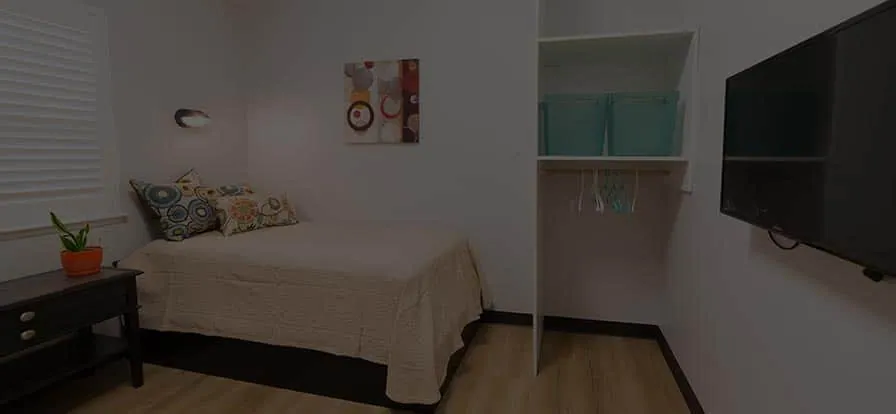 Inpatient
 Houston, TX
1019 Ashland St · 77008
- On-site labs
- 24-hour medical staff
Drug Detox Center in Houston, TX
-
 Outpatient
 San Antonio, TX
6707 W Hausman Rd · 78249
- Outpatient detox with scheduled medical visits
- Outpatient treatment
Outpatient Drug & Alcohol Detox in San Antonio
What Going Wrong Looks Like
- Acute panic and disorientation. Frightening, and for most people it passes. For some it does not pass quickly.
- Injury. Perception and judgment are affected at the same time, which is why so many emergency presentations are physical rather than psychiatric.
- A serotonin problem. Distinct from a difficult experience, and the distinction matters medically — see the emergency signs below.
- Something underlying surfacing. Where there is a predisposition, a first experience can be the point at which it appears.
What Can Persist
A minority of people go on to experience visual disturbances that continue long after use stops — described clinically as hallucinogen persisting perception disorder. It is not common, and it is not something anyone can predict for themselves in advance. It is the outcome people are least likely to have considered.
When to Get Emergency Help
Call 911 or get to an emergency room if there is a very high temperature, a racing or irregular heartbeat, seizures, muscle rigidity, unresponsiveness, or any risk that the person harms themselves or someone else.
High temperature and rigidity are the two worth memorizing. They point toward a serotonin problem rather than a difficult experience, and that changes what clinicians do next.
Tell them what was taken and what the person is prescribed. Nobody at a hospital is trying to get anyone arrested, and the medication question is the one that most often changes the treatment.
If It Has Stopped Being a One-Off
LSD does not produce the physical dependence that alcohol, benzodiazepines or opioids do, and stopping does not produce that kind of withdrawal. Nobody should be told they need a medical detox for LSD by default.
What people do come in for is the pattern around it — the anxiety or low mood underneath the use, or the fact that acid is rarely the only thing involved. Where alcohol or benzodiazepines are also in the picture, withdrawal from those can be dangerous and does need medical management.
Briarwood provides medically supervised detox with clinical observation throughout, and assesses what else is going on rather than treating one substance in isolation.
Common Questions
Is a first experience with LSD dangerous?+–
For most people it does not end in an emergency, but the risk is not evenly spread. Psychiatric medication, a personal or family history of psychosis or bipolar disorder, being alone or somewhere unfamiliar, and combining it with alcohol or stimulants all raise it materially.
Can LSD interact with antidepressants?+–
It can. LSD acts on the serotonin system and so do SSRIs, SNRIs and lithium. Treat it as a question for a prescriber, not something to work out from a forum.
How would someone know if it is not really LSD?+–
They would not, and that is the point. Substances sold as acid are sometimes NBOMe compounds instead, which carry a more dangerous profile. Neither strength nor identity can be judged by looking.
What are the warning signs that need an emergency room?+–
A very high temperature, a racing or irregular heartbeat, seizures, muscle rigidity, unresponsiveness, or any risk of harm to themselves or others. High temperature with rigidity in particular suggests a serotonin problem rather than a difficult experience.
Does Briarwood treat this?+–
Yes. We provide medically supervised observation and assess what else is involved, which is usually the more important question. Call and describe the situation -- it does not need a diagnosis first.
Related guides



About the people behind this guide
Anna-Grace Washington
Medical Content Writer
Anna-Grace Washington is a Medical Content Writer for Briarwood Detox Center. She holds a master’s degree in clinical psychology from the University of Texas and brings a strong understanding of behavioral health, addiction recovery, and evidence-based treatment concepts to her writing.
Dr. Robert Ulrich, DO
Medical Director
Dr. Robert Ulrich serves as Medical Director at Briarwood Detox Center, bringing more than two decades of clinical neurology experience to the treatment of substance use disorders. He is board-certified in neurology by the American Board of Psychiatry and Neurology and completed his neurology residency at UT Southwestern Medical Center in Dallas, where he served as Chief Resident.
In network with most major insurance
Find your plan and see what detox would cost
Most plans cover medical detox. Coverage varies by plan, so we verify it for you before you commit to anything.



















Don't see your plan? We work with out-of-network benefits and offer self-pay options — (866) 710-7710
- Confidential
- Takes about 2 minutes
- No obligation to admit
- Accredited The Joint Commission
- Rated 4.7 · 183 Google reviews Flourishing Foundations Recovery, now part of Briarwood
- Admissions 24 hours a day