
Guide
LSD and Gel Tabs: Effects, Duration, and When to Get Help
Joint Commission accredited · In network with most major insurance · Admissions answered 24 hours a day


Published August 14, 2026
If Someone Needs Help Right Now
If someone is having a medical emergency — a seizure, chest pain, a dangerously high temperature, unconsciousness, or they cannot be roused — call 911. If someone is talking about ending their life, call or text 988 to reach the Suicide and Crisis Lifeline. Both are staffed 24 hours a day, and neither requires you to know what somebody took.
Texas has a Good Samaritan law covering people who call for help during a drug-related emergency. Being afraid of getting someone in trouble is the most common reason people wait, and waiting is what turns a frightening night into a fatal one.
What This Page Will and Will Not Tell You
Plenty of people arrive here looking for instructions. This page does not have them, and it is worth saying that in the first screen rather than after two thousand words.
What is here instead: what the substance does, what the forms are and why strength cannot be judged by looking, how long it lasts, the specific signs that mean call 911, what can persist for months afterwards, and where medical care genuinely fits. If you have already decided to use it, there is a section further down on the things that actually change your risk, and none of them are about dose.
What LSD Does
LSD is a hallucinogen. It acts on serotonin receptors in the brain and changes perception, mood and thought — what people see and hear, how time feels, and how connected or detached they feel from their surroundings.
The physical effects are real and often underestimated: raised heart rate and blood pressure, dilated pupils, higher body temperature, sweating, tremor, nausea, and difficulty sleeping long after the mental effects have faded. Appetite usually disappears for the duration.
What LSD does not do is produce the kind of physical dependence that alcohol, benzodiazepines or opioids produce. That distinction matters, and it is the reason a good deal of what gets written about hallucinogens by treatment providers is misleading. It does not mean LSD is harmless. It means the harms are a different shape.
What Gel Tabs and Blotter Actually Are
People arrive at this question from two directions — someone who has found something and does not know what it is, and someone who has been handed something and does not know what is in it. Both deserve a straight answer.
LSD is active in amounts too small to see, so it is always carried on something else. The common forms:
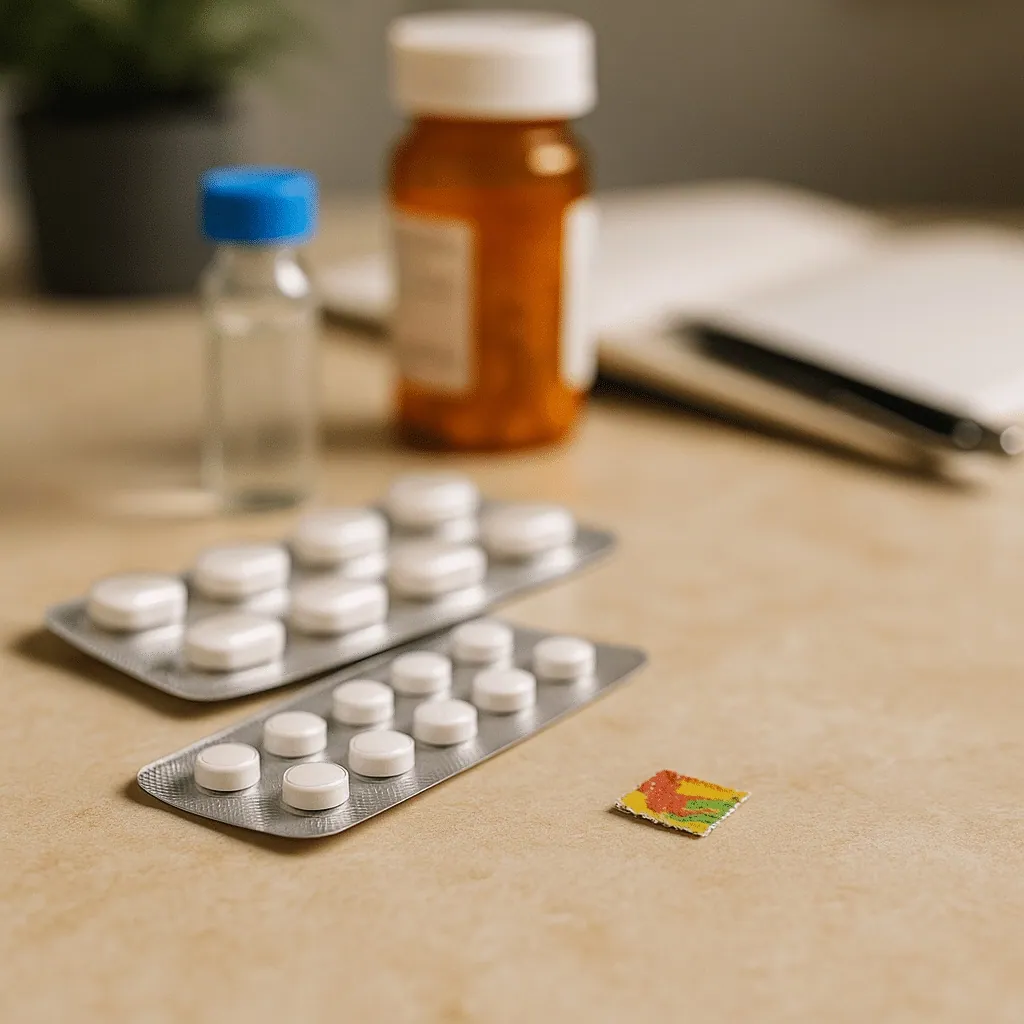
- Blotter — absorbent paper, usually perforated into small squares about a quarter-inch across, frequently printed with artwork. This is what “tabs” or “a sheet” refers to.
- Gel tabs — small squares of gelatin, thicker and slightly rubbery, sometimes clear and sometimes colored.
- Liquid — in a small dropper bottle or vial. Also what is used to make the other two.
- Occasionally — sugar cubes, capsules, or a sprayed sweet.
If you are looking at any of these in someone’s room, the honest summary is that you cannot tell the strength by looking, and neither can they.
That is the part worth taking seriously. There is no manufacturing standard, no label, and no consistency between one square and the next — including squares cut from the same sheet, because the liquid does not distribute evenly. A gel tab is not reliably stronger or weaker than blotter; the carrier says nothing about the contents. This is why “the same as last time” is not a thing that exists with this drug, and why the unpredictability is a bigger risk factor than the substance itself.
It is also why material sold as LSD is worth treating as unidentified. Some substitutes — the NBOMe compounds in particular — are far more dangerous and have caused deaths at amounts nobody could have detected by eye or by taste.
How Long the Effects Last
Effects typically begin 20 to 90 minutes after a dose and last somewhere between 6 and 12 hours, with the most intense period in the middle. That is a long time to be somewhere you did not expect to be.
The tail is longer than most people plan for. Sleep is often disrupted well into the following night, and many people describe a flat, drained, mentally foggy day afterwards. Judgment, reaction time and the ability to drive can be affected for hours after someone believes the effects have worn off.
Duration varies with the person, the dose and what else is in their system. There is no reliable way to shorten it once it has started, and nothing sold as a way to do so has been shown to work.
When It Becomes an Emergency
Most difficult experiences with LSD are psychologically distressing rather than medically dangerous. Some are both, and the difference is worth knowing before you need it.
Call 911 if any of the following are present:
- A seizure, or repeated jerking movements the person cannot control
- Chest pain, a racing heart that does not settle, or difficulty breathing
- Body temperature that is climbing, hot dry skin, or confusion with a high temperature
- Vomiting that will not stop, or any sign of dehydration in someone who cannot keep fluids down
- Loss of consciousness, or a person who cannot be woken
- Any threat or attempt to harm themselves or someone else
- Rigid muscles with agitation and a high temperature — particularly if antidepressants or other serotonergic medication are involved
Tell the dispatcher what was taken if you know it. Emergency staff are not law enforcement, and treatment for a hyperthermic or agitated patient is different from treatment for an overdose of a depressant. Guessing costs time.
The Danger That Is Usually Missed: Mixing
The single most consequential thing about hallucinogen use is rarely the hallucinogen. It is what else is present.
LSD combined with alcohol, benzodiazepines or opioids means two sets of effects and two sets of risks, and the depressant is the one that stops breathing. Combined with stimulants, cardiac strain and body temperature both go up. Combined with SSRIs, SNRIs, MAOIs, lithium or tramadol, there is a risk of serotonin syndrome — a medical emergency, not a bad night.
There is also the problem of not knowing what a substance is. Material sold as LSD is sometimes not LSD, and some substitutes are considerably more dangerous, particularly the NBOMe compounds, which have caused deaths at amounts a person could not detect.
Where we are
Detox centers across Texas
Three locations, each with its own admissions line and its own clinical team. Pick the one nearest you — or call and we will tell you which has a bed tonight.
-
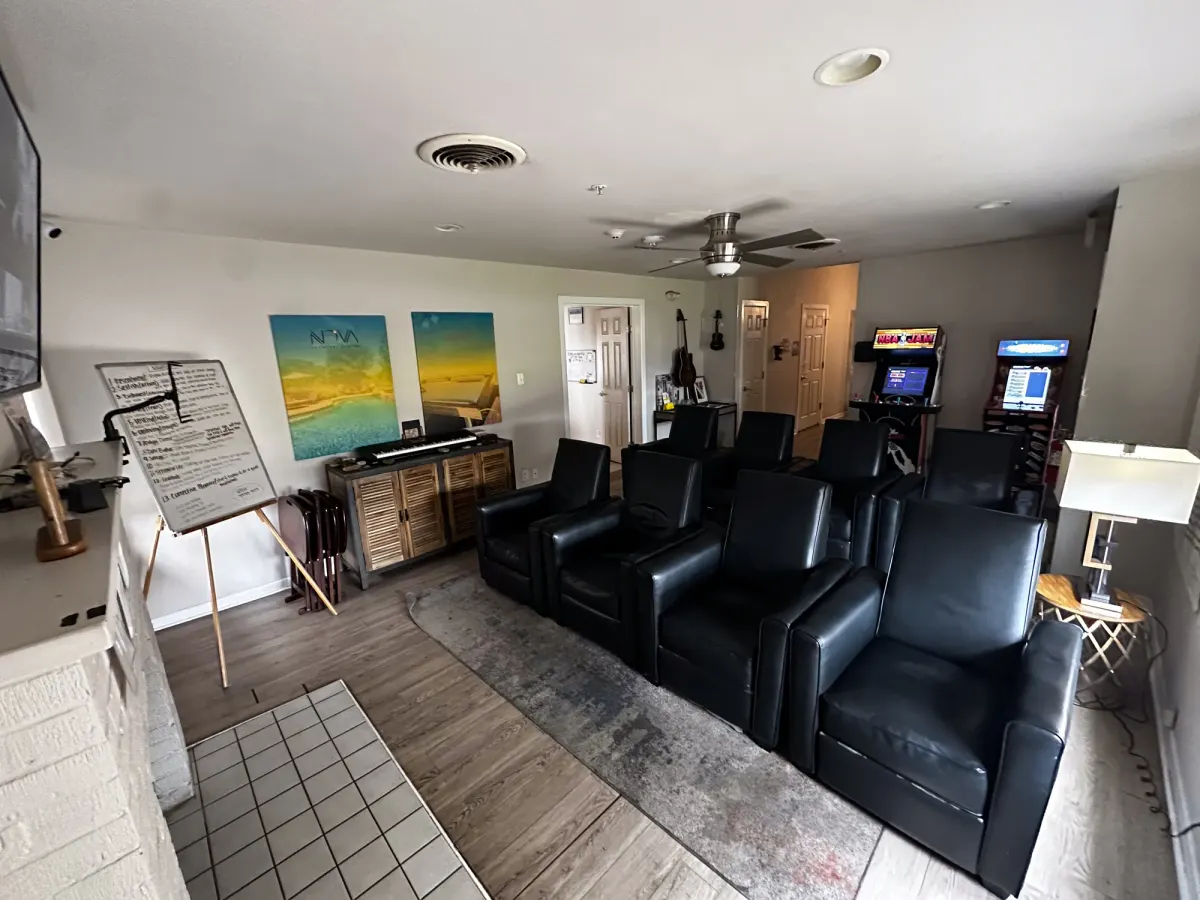 Inpatient
 Austin, TX
11711 N Lamar Blvd · 78753
- 15 beds
- On-site labs
- 24-hour medical staff
Drug & Alcohol Detox in Austin, TX
-
 Inpatient
 Houston, TX
1019 Ashland St · 77008
- On-site labs
- 24-hour medical staff
Drug Detox Center in Houston, TX
-
 Outpatient
 San Antonio, TX
6707 W Hausman Rd · 78249
- Outpatient detox with scheduled medical visits
- Outpatient treatment
Outpatient Drug & Alcohol Detox in San Antonio
If You Are Going to Do It Anyway
Some people reading this have already decided. Pretending otherwise would not change that, so here is the honest version — and note what is not on the list, because none of these are about how much.
The conversation that actually changes your risk is with a doctor, about you. Not general advice, and not something available from a search result. Four things move the risk substantially and none of them can be looked up:
- What medication you take. SSRIs, SNRIs, MAOIs, lithium and tramadol all carry a serotonin syndrome risk in combination. That is a medical emergency, not a rough night.
- Your heart. Blood pressure and heart rate both rise. An arrhythmia or an existing cardiac condition changes what that means.
- Seizure history. Yours, and anything you take for it.
- Psychiatric history, including your family’s. This is the big one, and the one people do not know to check. A parent or grandparent with bipolar disorder or a psychotic illness puts you in the group where a hallucinogen can precipitate an episode that does not end when the drug does.
A doctor can tell you which of those apply to you in about ten minutes, and none of them will be discovered by anybody else in the room.
The rest of what matters is short. Mixing is what causes the deaths — particularly anything that slows breathing. What is sold as LSD is frequently not LSD, and some substitutes are lethal at amounts nobody can detect. Do not drive, for considerably longer than you will feel like you need to. Do not be alone, and make sure whoever is there knows the signs in the emergency list above and is willing to call 911 rather than wait it out.
That is the complete list of things a medical provider can honestly tell you. Anything beyond it is somebody guessing about a substance with no manufacturing standard.
Long-Term Effects Worth Knowing About
An acutely frightening experience — overwhelming fear, paranoia, the conviction that something is permanently wrong — is common enough to be unremarkable and can still leave a mark. Some people are anxious for weeks afterwards. Some have panic attacks for the first time in their lives and keep having them.
Three longer-term outcomes are worth naming, two of them because people are often told they are imagining them:
Persistent perceptual changes. Visual disturbances that continue after the drug is gone — trails, halos, static, motion at the edge of vision — can last months or years. When they are distressing and persistent, this is recognized as hallucinogen persisting perception disorder, and it is a real diagnosis rather than a rumor.
Precipitated or worsened mental illness. For people with a personal or family history of psychosis or bipolar disorder, hallucinogens can bring forward or intensify an episode. This is the group for whom the risk is categorically different, and it is often unknown until it happens — a family history nobody discussed is still a family history.
Persistent anxiety, and the loop it creates. A frightening experience can leave a lasting fear of the experience itself, which in turn feeds anxiety day to day. It is the most common lasting effect and the least dramatic, which is why it usually goes untreated. It responds well to treatment when someone actually raises it.
None of this is settled by waiting to see. If any of it describes you or someone you know, the useful next step is an assessment with someone who treats both substance use and mental health — and it is worth saying out loud to a doctor rather than searching for it, because the questions a clinician asks about your history are the ones that decide which of these three you are looking at.
Is LSD Addictive?
Not in the way that produces a withdrawal syndrome. People do not typically become physically dependent on LSD, and stopping does not usually cause the dangerous withdrawal that stopping alcohol or benzodiazepines can cause.
Tolerance does build quickly, which changes behavior in ways worth watching. And use can absolutely become a problem without physical dependence: if it is happening more often than intended, taking up money or time that was meant for other things, continuing after a frightening experience, or being used to avoid something, that is a pattern worth talking to someone about. So is using it alongside anything else.
Where Medical Care Fits
Two things are true at once here, and most pages on this subject only tell you one of them.
There is no withdrawal protocol for a hallucinogen. LSD does not produce the physical dependence that alcohol, benzodiazepines and opioids produce, so there is no taper to manage and no withdrawal medication to give. Anyone telling you that stopping LSD requires medically managed withdrawal is describing a different drug.
Observation in a medical setting is still a real and sometimes correct option. Withdrawal is not the only reason to have a nurse and a physician nearby. Coming off a heavy or prolonged period of use, or off a single frightening experience, can leave someone agitated, sleepless, paranoid, unable to eat, or unsafe to be alone with their own thoughts — and none of that is improved by riding it out on a sofa. A monitored setting means vital signs, hydration, sleep, and somebody qualified watching for the things on the emergency list above rather than a friend guessing.
Situations where being observed is the safer call:
- Agitation, paranoia or confusion that is not settling as the effects wear off
- Any thought of self-harm, or a mood that is dropping rather than leveling out
- Signs of a first psychotic or manic episode, particularly with a family history of either
- Heavy or repeated use over days, or use alongside alcohol, benzodiazepines or opioids
- No safe place to be, or nobody sober to be there
- Existing heart conditions, seizure history, pregnancy, or serotonergic medication
Where detox is unambiguously the medical answer is the substances that are physically dangerous to stop: alcohol, benzodiazepines and opioids. If LSD is one part of a picture that includes any of those — which is common — that part is the part to ask about first, and it is the part with a protocol behind it.
If hallucinogens are the whole picture and none of the situations above apply, an assessment will usually point at outpatient treatment rather than a bed: therapy, a look at what the use is doing for you, and treatment of any anxiety, depression or trauma underneath it. That is intensive outpatient treatment, and it does not require detoxing first.
What decides between those is an assessment, not a web page. It is free, it takes about twenty minutes, and it can end with someone telling you that you do not need what they sell.
How to Help Someone Else
You cannot argue somebody out of an acute experience, and trying usually makes it worse. What helps in the moment is dull and effective: stay with them, keep the room quiet and the lights low, keep them hydrated, and do not leave them alone or let them drive. Do not add anything else — not alcohol, not a sedative someone has in a drawer.
What helps afterwards is a conversation when they are rested rather than a confrontation while they are not. If you are worried enough to be reading this, that is worth acting on. An assessment costs nothing and does not commit anyone to a program.
Common Questions About LSD
How long does LSD stay in your system?+–
The effects usually last 6 to 12 hours, but the substance and its metabolites can be detectable for longer, and standard workplace urine panels do not typically screen for LSD at all. Sleep disruption and mental fogginess often continue into the following day regardless of what a test would show.
Can you overdose on LSD?+–
Deaths from LSD alone are rare, which is not the same as safe. The serious outcomes come from behavior during the experience, from dangerously high body temperature and cardiac strain, from combinations with other substances, and from material sold as LSD that is something else entirely -- NBOMe compounds in particular have caused deaths.
How long do gel tabs last compared to blotter?+–
There is no reliable difference. The carrier -- gel, paper or liquid -- does not determine strength or duration, and there is no consistency between one square and the next even from the same sheet. Effects generally begin within 20 to 90 minutes and last 6 to 12 hours regardless of the form.
Is there dangerous withdrawal from LSD, and does anyone need medical detox?+–
There is no withdrawal protocol for a hallucinogen, because LSD does not cause the physical dependence that alcohol and benzodiazepines do. That is not the same as saying nobody needs medical care. Observation in a monitored setting is the safer option for agitation or paranoia that is not settling, any thought of self-harm, signs of a first psychotic or manic episode, heavy or repeated use, use alongside other substances, or having nowhere safe to be. An assessment decides which applies.
Should I talk to a doctor after using LSD?+–
Yes, if anything has persisted -- visual disturbances, new or worsening anxiety or panic, mood changes, sleep that has not recovered, or any thought of self-harm. Those are the things worth describing to a clinician who can take a history, rather than researching. It is also the right conversation if you take antidepressants or other serotonergic medication, or have a heart or seizure condition.
What is HPPD?+–
Hallucinogen persisting perception disorder -- visual disturbances such as trails, halos or static that continue after a hallucinogen has left the system, sometimes for months or years. It is a recognized diagnosis. If it is distressing or persistent, an assessment with a clinician who treats both substance use and mental health is the right next step.
Should I go to the emergency room for a bad reaction?+–
Call 911 for a seizure, chest pain, breathing difficulty, a climbing body temperature, unconsciousness, or any risk of harm to themselves or others. For distress without those signs, staying with the person somewhere quiet is usually enough -- but if you are unsure, err toward calling. Texas has a Good Samaritan law covering people who call for help in a drug-related emergency.
Does insurance cover treatment for hallucinogen use?+–
Most major insurance covers medically necessary addiction and mental health treatment, and Briarwood is in network with eighteen carriers. What your plan requires varies, so benefits are verified free before anything is scheduled.
Where to Start
If something has already happened and has not gone away — visual disturbances, anxiety that arrived and stayed, sleep that has not come back, a mood that keeps dropping — that is the thing to describe to a clinician. It is treatable, and it is treated more easily the sooner somebody hears about it.
If the picture includes alcohol, benzodiazepines or opioids, that part has a protocol behind it and is the part to ask about first.
And if you are reading this about somebody else, the assessment does not require them to be ready for anything. It is a conversation that establishes what is actually going on. Admissions is staffed 24 hours a day, it costs nothing, and it can end with someone telling you that you do not need what they sell.
Related guides

About the people behind this guide
Anna-Grace Washington
Medical Content Writer
Anna-Grace Washington is a Medical Content Writer for Briarwood Detox Center. She holds a master’s degree in clinical psychology from the University of Texas and brings a strong understanding of behavioral health, addiction recovery, and evidence-based treatment concepts to her writing.
Dr. Robert Ulrich, DO
Medical Director
Dr. Robert Ulrich serves as Medical Director at Briarwood Detox Center, bringing more than two decades of clinical neurology experience to the treatment of substance use disorders. He is board-certified in neurology by the American Board of Psychiatry and Neurology and completed his neurology residency at UT Southwestern Medical Center in Dallas, where he served as Chief Resident.
In network with most major insurance
Find your plan and see what detox would cost
Most plans cover medical detox. Coverage varies by plan, so we verify it for you before you commit to anything.

















Don't see your plan? We work with out-of-network benefits and offer self-pay options — (866) 710-7710
- Confidential
- Takes about 2 minutes
- No obligation to admit

- Accredited The Joint Commission
- Rated 4.7 · 183 Google reviews Flourishing Foundations Recovery, now part of Briarwood
- Admissions 24 hours a day