
Guide
My Husband Is Addicted to Fentanyl and Won't Admit It—Help
Joint Commission accredited · In network with most major insurance · Admissions answered 24 hours a day

Published July 18, 2026
Reviewed and updated July 29, 2026
When your husband is addicted to fentanyl and won't admit he has a problem, you face two challenges at once: the life-threatening nature of fentanyl dependence and the wall of denial that blocks the path to treatment. Getting him into treatment often requires a combination of clear communication, professional intervention support, and readiness to act the moment he shows willingness. Fentanyl withdrawal is dangerous enough that medically supervised detox isn't optional—it's essential—and understanding what comes next can help you prepare for the narrow window when he might agree to help.
If you or someone you love needs more than detox, Briarwood Detox Center also provides austin tx drug rehab.
Briarwood Detox Center’s opiate detox program provides medically supervised, evidence-based care.
Why Fentanyl Denial Runs So Deep
Fentanyl rewires the brain's reward circuitry with unprecedented speed. Because it's 50 to 100 times more potent than morphine, even short-term use creates profound physical dependence. The brain adapts so completely that normal function depends on the drug's presence.
Does your insurance cover detox in Austin?
Find out in about 2 minutes — free, confidential, no obligation.
Verify InsuranceDenial isn't stubbornness or moral weakness—it's a psychological defense mechanism reinforced by neurochemistry. Your husband may genuinely believe he's in control even as tolerance climbs and withdrawal symptoms dictate his daily schedule. The drug hijacks insight itself, making the user the last person to recognize the problem.
Fentanyl's short half-life (2 to 4 hours for most formulations) means withdrawal begins quickly after the last dose. Many users interpret early withdrawal discomfort as a need for the drug rather than evidence of dependence, which deepens the denial cycle.
Recognizing the Signs When He Won't Admit the Problem
Even without his acknowledgment, fentanyl addiction follows observable patterns. Physical signs include constricted pupils, drowsiness alternating with hyperalertness, slurred speech, and shallow breathing. You may notice track marks if he's injecting, or small burned pieces of foil if he's smoking.
Behavioral changes are often more telling:
- Disappearing for unexplained periods, particularly at predictable intervals
- Financial problems—missing money, unexplained withdrawals, or mounting debt
- Social withdrawal from family, friends, and activities he once enjoyed
- Dramatic mood swings tied to drug availability
- Defensiveness or anger when questioned about whereabouts or behavior
If he's obtaining fentanyl through street drugs, the risk multiplies. Illicit fentanyl is often mixed into counterfeit pills or other substances, and dosing inconsistency makes every use potentially fatal.
How to Talk to Your Husband About Fentanyl Addiction
Timing and tone matter more than the words themselves. Avoid conversations when he's intoxicated or in early withdrawal—neither state allows for rational discussion. Choose a moment when he's relatively stable, and you're calm enough to stay non-confrontational.
Use specific observations rather than labels. Instead of "You're an addict," try "I've noticed you've been isolating yourself, and I'm worried about the times you've nodded off mid-conversation." Concrete examples are harder to dismiss than general accusations.
Express concern from a place of love, not judgment. Phrases like "I'm scared I'm going to lose you" land differently than "You're destroying this family." The goal isn't to win an argument—it's to plant a seed that treatment is possible and you'll support it.
Expect denial, deflection, or anger. These are normal responses. Don't argue facts or try to force immediate agreement. Sometimes the most important thing you can say is "When you're ready to get help, I'll be here, and I already know where we can go."
When to Consider a Professional Intervention
If direct conversation fails—and with fentanyl, it often does—a structured intervention may create the leverage needed. Professional interventionists understand addiction psychology and can guide family members through a process designed to break through denial while preserving relationships.
An intervention is not an ambush. It's a carefully planned meeting where loved ones present a united front, share specific concerns, outline consequences for continued use, and offer an immediate treatment option. The interventionist keeps the conversation focused and prevents it from devolving into blame or chaos.
Successful interventions have logistics in place before the meeting begins. That means a detox bed reserved, insurance verified, and a bag packed. When someone addicted to fentanyl agrees to treatment, the window is often measured in minutes. Hesitation or delay allows second thoughts to take root.
Where we are
Detox centers across Texas
Three locations, each with its own admissions line and its own clinical team. Pick the one nearest you — or call and we will tell you which has a bed tonight.
-
 Inpatient
 Austin, TX
11711 N Lamar Blvd · 78753
- 15 beds
- On-site labs
- 24-hour medical staff
Drug & Alcohol Detox in Austin, TX
-
 Inpatient
 Houston, TX
1019 Ashland St · 77008
- On-site labs
- 24-hour medical staff
Drug Detox Center in Houston, TX
-
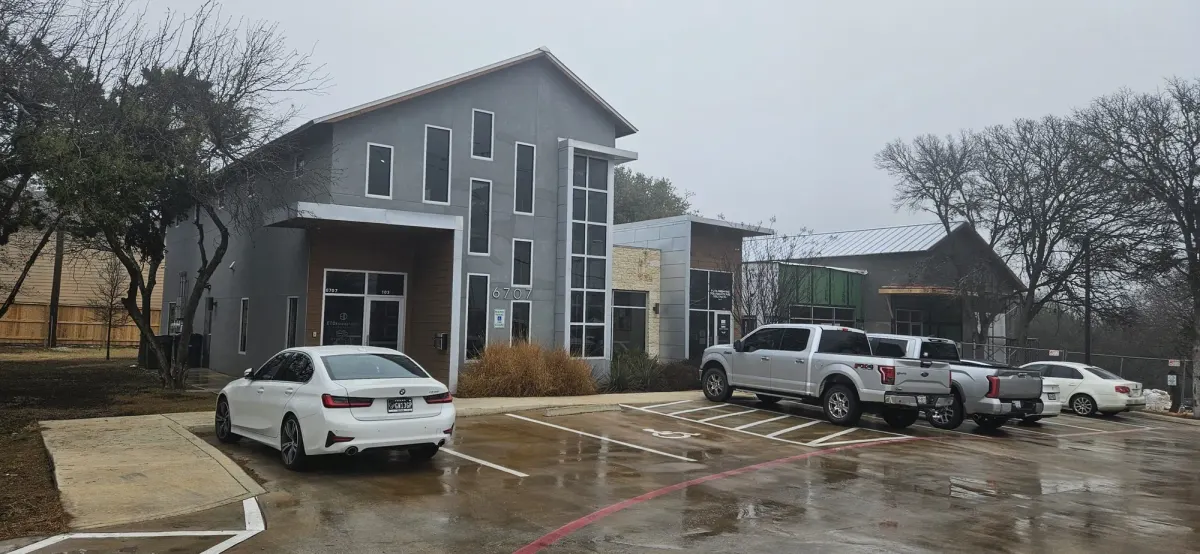 Outpatient
 San Antonio, TX
6707 W Hausman Rd · 78249
- Outpatient detox with scheduled medical visits
- Outpatient treatment
Outpatient Drug & Alcohol Detox in San Antonio
Why Medically Supervised Detox Is Non-Negotiable for Fentanyl
Fentanyl withdrawal isn't typically life-threatening in the way alcohol or benzodiazepine withdrawal can be, but it's severe enough to require medical management. Symptoms peak within 12 to 30 hours after the last dose and include muscle pain, nausea, vomiting, diarrhea, severe anxiety, rapid heart rate, and overwhelming cravings.
The intensity drives relapse. Most people who try to quit fentanyl without support return to use within 72 hours simply to stop the pain. That first use after detox is when overdose risk spikes—tolerance drops quickly, and the dose that was "normal" a week ago can now be fatal.
Medically supervised detox addresses withdrawal on multiple fronts. Medications like buprenorphine or methadone ease physical symptoms while reducing cravings. Clonidine manages autonomic hyperactivity—the racing heart, sweating, and agitation. Anti-nausea medications, sleep aids, and IV fluids keep the patient stable and as comfortable as possible.
At Briarwood Detox Center, we offer both inpatient and outpatient detox options depending on clinical need and location. Our inpatient program in Austin, Texas, provides 24/7 medical supervision during the acute withdrawal phase. For patients with strong home support and less severe dependence, outpatient detox in Austin, San Antonio, Houston, or Colorado Springs allows treatment while maintaining some daily routines.
What Happens After You Get Him to Agree
The moment your husband says "yes" to treatment is when preparation pays off. Don't spend that moment researching facilities or calling insurance companies—do that work in advance. Have a detox center contacted, a bed reserved if possible, and insurance benefits already verified.
If he agrees in the morning, aim to have him admitted that day. Fentanyl cravings are cyclical and intense. What feels like resolve at 9 a.m. can dissolve into panic and rationalization by noon. Speed matters.
Expect ambivalence even after he's agreed. It's normal for someone to waver, express doubt, or try to negotiate delays. Stay calm, empathetic, and firm. Remind him why he said yes in the first place, and keep moving toward the treatment facility.
Ready to talk to someone now? Briarwood Detox Center's admissions team is here 24/7, and every call is confidential. Call (866) 710-7710.During detox, your role shifts. Most programs encourage limited contact in the first few days to let the patient focus entirely on stabilization. Use that time to care for yourself, connect with support resources like Al-Anon or Nar-Anon, and prepare for what comes next.
How to Help Without Enabling His Addiction
The line between helping and enabling is thin but critical. Enabling means removing the natural consequences of addiction in ways that allow it to continue. Helping means supporting recovery while letting him experience the discomfort that motivates change.
Enabling looks like giving money without accountability, making excuses to his employer, or bailing him out of legal trouble caused by drug use. It feels like love, but it insulates him from the reality that might otherwise break through denial.
Helping looks like offering to drive him to detox, verifying his insurance benefits, and refusing to lie for him when addiction causes problems. It means setting boundaries—"I won't give you cash, but I will pay the electric bill directly"—and holding them even when it's painful.
You can't control whether he gets sober, but you can control what you're willing to tolerate and participate in. Clear boundaries aren't punishments; they're honest statements about what you can and cannot do while preserving your own well-being.
Understanding Fentanyl's Timeline in the Body
Fentanyl's elimination half-life varies by formulation. Immediate-release fentanyl has a half-life of about 2 to 4 hours, meaning half the dose is metabolized in that window. Extended-release patches release the drug slowly, extending the half-life to 20 to 27 hours.
In urine, fentanyl is typically detectable for 24 to 72 hours after last use, though chronic heavy use can extend that window. Blood tests show fentanyl for about 12 hours. Hair follicle tests can detect use for up to 90 days, though they're less common in clinical settings.
These timelines matter for two reasons. First, they explain why withdrawal symptoms appear so quickly—once the drug clears, the dependent body reacts immediately. Second, they inform drug testing during and after detox, helping clinical teams monitor progress and detect relapse.
What to Expect from Fentanyl Withdrawal Treatment
Medication-assisted treatment (MAT) is the standard of care for opioid withdrawal, including fentanyl. Buprenorphine, a partial opioid agonist, binds to the same receptors as fentanyl but produces less euphoria and longer-lasting stability. It reduces cravings and withdrawal severity without creating the same high.
Methadone is another option, particularly for patients with long-term, high-dose fentanyl use. It's a full opioid agonist dispensed daily in controlled settings, allowing gradual tapering while preventing withdrawal.
Adjunct medications manage specific symptoms. Clonidine lowers blood pressure and reduces sweating and anxiety. Ondansetron or promethazine control nausea. Trazodone or other sleep aids address the insomnia that can persist for weeks.
Detox typically lasts 5 to 7 days for acute stabilization, though some patients need longer. The goal is to reach a point where withdrawal symptoms are manageable and the patient is stable enough to transition to ongoing treatment—whether that's outpatient counseling, a residential program, or continued MAT in a community setting.
Taking the First Step When You Feel Helpless
Loving someone with a fentanyl addiction is exhausting, terrifying, and isolating. You can do everything right—communicate perfectly, set firm boundaries, arrange the best treatment—and he may still refuse. That's the nature of addiction. You can't force recovery, but you can remove the barriers when he's ready.
Your preparation matters. Know where you'll send him when he says yes. Understand what insurance covers. Have the phone number saved. The moment someone addicted to fentanyl agrees to treatment is fragile and fleeting—don't let logistics steal it.
If your husband is addicted to fentanyl and won't admit he has a problem, Briarwood Detox Center can walk you through next steps, verify insurance benefits, and answer questions about our medically supervised detox programs. Reach out when you're ready—we're here to help both of you.
Ready to take the next step?
Briarwood Detox Center provides medically supervised drug & alcohol detox. Call (866) 710-7710 to speak with our team today.
Frequently Asked Questions
How do you help an addict who doesn't want help?+–
You can't force someone into recovery, but you can prepare the way and remove obstacles. Educate yourself about treatment options, verify insurance coverage, and have a detox facility identified before the crisis moment. Set clear boundaries to stop enabling, express concern without judgment, and consider a professional intervention if direct conversations fail. When the person shows even brief willingness, act immediately—windows of readiness close quickly.
How long does fentanyl stay in your system?+–
Fentanyl is detectable in urine for 24 to 72 hours after last use, in blood for about 12 hours, and in hair follicles for up to 90 days. The elimination half-life depends on the formulation: immediate-release fentanyl has a half-life of 2 to 4 hours, while extended-release patches extend it to 20 to 27 hours. Chronic heavy use may extend detection windows.
What is used to treat fentanyl withdrawal?+–
Fentanyl withdrawal is treated with medications that ease symptoms and reduce cravings. Buprenorphine and methadone are the primary medications, both opioid agonists that stabilize brain chemistry without producing a high. Clonidine manages anxiety, sweating, and rapid heart rate. Anti-nausea drugs, sleep aids, and IV fluids provide comfort and safety. Medically supervised detox combines these medications with 24/7 monitoring to prevent complications.
How to deal with a drug addict husband?+–
Set firm boundaries about what behaviors you will and won't tolerate, and follow through consistently. Avoid enabling by refusing to provide money, make excuses, or shield him from consequences. Educate yourself about addiction and treatment options so you're ready when he's willing to accept help. Seek support for yourself through groups like Nar-Anon or therapy. Remember you can't control his choices, only your own responses.
How to encourage a drug addict to stop?+–
Use specific, non-judgmental observations rather than labels or accusations. Express concern from a place of love and fear for his safety, not anger or shame. Avoid conversations when he's intoxicated or in withdrawal. Offer concrete help—like having a treatment facility already contacted and insurance verified—so logistics don't become an excuse. If he refuses, consider a professional intervention to break through denial with the support of trained specialists.
How to help someone without enabling them?+–
Helping means supporting recovery; enabling means protecting someone from the consequences that motivate change. Don't give money, lie to cover absences, or bail him out of drug-related legal trouble. Do offer to arrange treatment, pay bills directly to providers, and hold firm boundaries. Let natural consequences happen while making it clear that you'll support any genuine step toward recovery. The discomfort you allow may be what finally drives change.
Why won't my husband admit he has a fentanyl problem?+–
Denial is a psychological defense mechanism reinforced by the way fentanyl alters brain chemistry. The drug hijacks the brain's reward system so completely that normal function depends on its presence. Your husband may genuinely believe he's in control even as tolerance and withdrawal dictate his behavior. Fentanyl's rapid onset of dependence makes users the last to recognize the problem—insight itself becomes impaired by neurochemical changes.
Can I force my husband into fentanyl detox?+–
In most states, you cannot force an adult into treatment unless he's deemed an immediate danger to himself or others, which requires legal proceedings. Involuntary commitment laws vary by location and are difficult to pursue. Your best option is preparation—have treatment ready and accessible so when he shows willingness, even briefly, you can act immediately. Professional interventions can create motivation, but lasting recovery requires his participation and consent. Ready to Start Your Recovery in Austin? Briarwood Detox Center offers medically supervised detox in Austin. Explore our locations, see the facility, and verify your insurance in minutes. See our locations
Related guides

About the people behind this guide
Anna-Grace Washington
Medical Content Writer
Anna-Grace Washington is a Medical Content Writer for Briarwood Detox Center. She holds a master’s degree in clinical psychology from the University of Texas and brings a strong understanding of behavioral health, addiction recovery, and evidence-based treatment concepts to her writing.
Dr. Robert Ulrich, DO
Medical Director
Dr. Robert Ulrich serves as Medical Director at Briarwood Detox Center, bringing more than two decades of clinical neurology experience to the treatment of substance use disorders. He is board-certified in neurology by the American Board of Psychiatry and Neurology and completed his neurology residency at UT Southwestern Medical Center in Dallas, where he served as Chief Resident.
In network with most major insurance
Find your plan and see what detox would cost
Most plans cover medical detox. Coverage varies by plan, so we verify it for you before you commit to anything.


















Don't see your plan? We work with out-of-network benefits and offer self-pay options — (866) 710-7710
- Confidential
- Takes about 2 minutes
- No obligation to admit

- Accredited The Joint Commission
- Rated 4.7 · 183 Google reviews Flourishing Foundations Recovery, now part of Briarwood
- Admissions 24 hours a day