
Guide
72 Hours Without Alcohol: What Happens at the Peak of Withdrawal
Joint Commission accredited · In network with most major insurance · Admissions answered 24 hours a day


Published September 5, 2026
If you are somewhere between hour 48 and hour 72 without a drink right now, this page is written for you first. The short version: you are at the peak, the peak is temporary, and there is a specific list of signs that turn it from miserable into medical. That list is the third section.
If you are reading ahead — planning to stop, or watching someone who has — the same information tells you what to prepare for and when to stop preparing and call.
What happens at 48 to 72 hours without alcohol?
Hours 48 to 72 are when alcohol withdrawal peaks for most people who drank heavily every day, so this is usually the worst stretch and not a sign that something has gone wrong.
Symptoms tend to begin within about 8 hours of the last drink, build through the first day, and peak by 24 to 72 hours. For a light or occasional drinker, day three is often unremarkable. For someone who has been drinking heavily and daily for months or years, day three is the hard one: the shaking, sweating, racing heart, nausea and anxiety of the first two days are still there and often stronger, and sleep has usually collapsed.
Roughly half of people who suddenly stop or cut back after heavy drinking develop withdrawal syndrome at all. Of those who do, most get through it with symptoms that are unpleasant but not dangerous. The rest is what the next two sections are about.
Source: Alcohol withdrawal, MedlinePlus, National Library of Medicine.
Why does withdrawal peak on day 3 instead of day 1?
Because alcohol leaves the blood in hours, but the brain’s adaptation to it takes days to unwind, and the gap between those two clocks is the withdrawal.
Alcohol is a sedative. With daily use, the brain compensates: it turns down its own calming signal, GABA, and turns up its excitatory signal, glutamate, so that a person can function while sedated. Take the alcohol away and the compensation is still running — weak brakes, strong accelerator — with nothing left to push against. That overshoot is what produces the tremor, the sweating, the fast pulse and the anxiety, and it builds for two to three days before the brain begins to rebalance.
This is also why past withdrawal matters. Someone who has been through it before tends to have a harder time the next time, even when the first day looks mild. The clock does not reset between attempts.
What symptoms are normal at hour 48 to 72?
The normal symptoms at hour 48 to 72 are shaking, sweating, a racing heart, nausea, anxiety and insomnia, and none of them on their own means an emergency.
At this point people commonly report:
- A tremor strong enough to make holding a cup difficult
- Heavy sweating, often worse at night
- Heart pounding, and blood pressure that is higher than usual
- Nausea, poor appetite, sometimes vomiting
- Anxiety that can tip into panic, and irritability
- Almost no sleep, or sleep broken by vivid dreams
- Headache, and sensitivity to light and sound
Fluids, food if it will stay down, and someone else in the house matter more than any remedy at this stage. What matters most is knowing the line between this list and the next one.
Which symptoms at 72 hours are an emergency?
Confusion, hallucinations, a seizure, or a high fever with heavy sweating — any one of those at any hour is an emergency room now, not a wait-and-see.
Two complications live inside this window. Withdrawal seizures typically occur between 8 and 48 hours after the last drink, so by hour 72 the highest-risk period for a first seizure is passing, but it is not closed. Delirium tremens — sudden severe confusion, agitation, fever and hallucinations — is the more dangerous one, and its risk window runs from roughly day 3 to day 8. Hour 72 is the front edge of it, not the far side.
Delirium tremens develops in about 3 to 5% of people who have withdrawal syndrome. Historically it killed as many as one in five of them. With modern critical care the mortality is around 1%, and the whole of that improvement comes from being in a hospital when it starts.
Brief hallucinations on their own — hearing or seeing things that are not there while otherwise knowing where you are — are a separate, less dangerous phenomenon called alcoholic hallucinosis, and they usually resolve within 72 hours. Hallucinations with confusion are not that. They are the emergency.
For the hour-by-hour detail on both complications and who is most at risk, the alcohol withdrawal seizures and DTs page goes deeper than this one needs to.
Source: Alcohol Withdrawal Syndrome, StatPearls, National Library of Medicine.
Where we are
Detox centers across Texas
Three locations, each with its own admissions line and its own clinical team. Pick the one nearest you — or call and we will tell you which has a bed tonight.
-
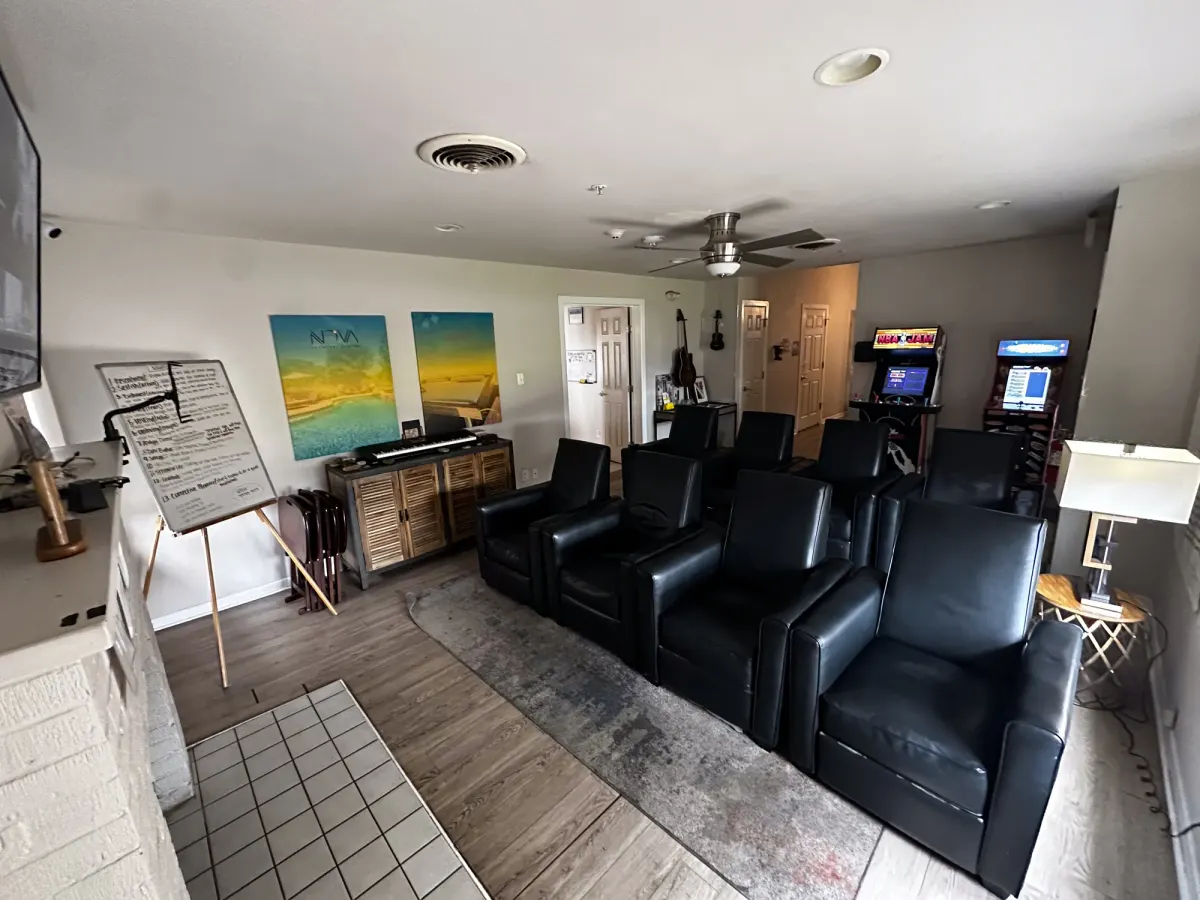 Inpatient
 Austin, TX
11711 N Lamar Blvd · 78753
- 15 beds
- On-site labs
- 24-hour medical staff
Drug & Alcohol Detox in Austin, TX
-
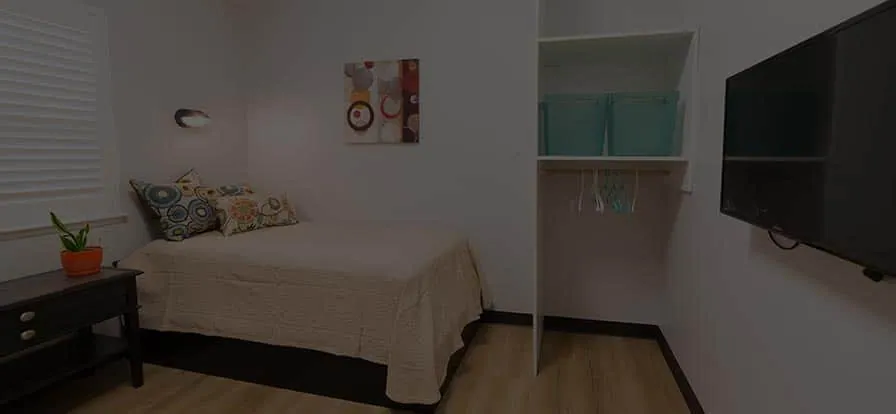 Inpatient
 Houston, TX
1019 Ashland St · 77008
- On-site labs
- 24-hour medical staff
Drug Detox Center in Houston, TX
-
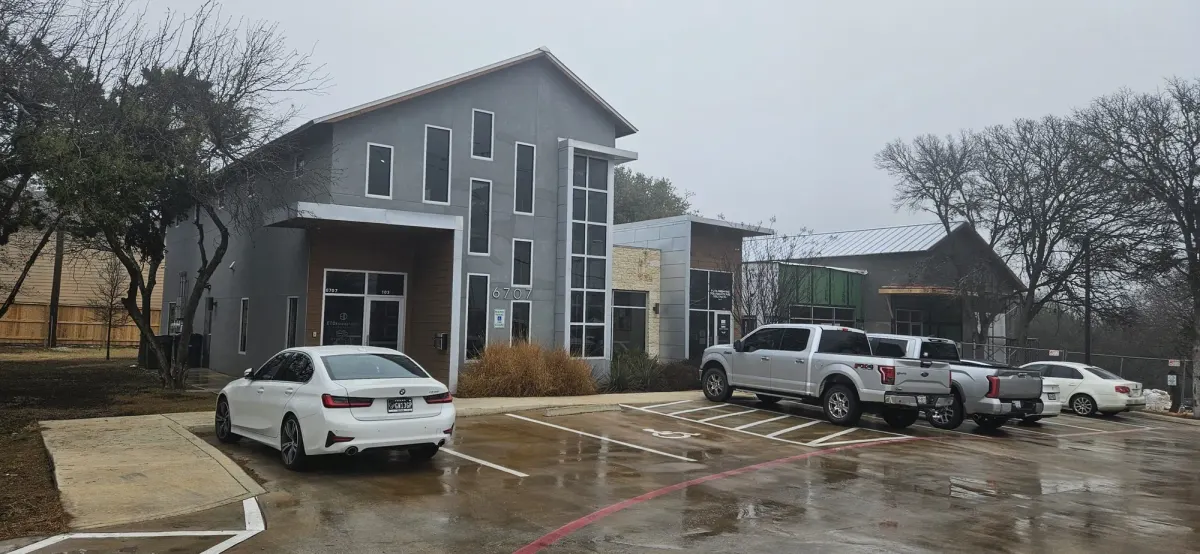 Outpatient
 San Antonio, TX
6707 W Hausman Rd · 78249
- Outpatient detox with scheduled medical visits
- Outpatient treatment
Outpatient Drug & Alcohol Detox in San Antonio
What happens after 72 hours without alcohol?
After 72 hours the acute symptoms usually begin to ease, but the danger window has not fully closed and sleep does not follow the same curve.
Over days four to seven the tremor, sweating and nausea fade as the nervous system stops over-correcting. Appetite starts to return. Heart rate and blood pressure drift back toward normal. Most people describe day five or six as the first day that feels like the far side.
Two things do not resolve on that schedule. Delirium tremens can still appear up to day 8, so a person who was heavy enough to be at risk should not be alone in the house on day 4 because day 3 went well. And insomnia, anxiety and low mood often continue for weeks, which is normal and is covered on the 30 days sober page, because it becomes the main event once the physical part is over.
Are there benefits at 72 hours without alcohol?
The honest answer is that 72 hours is where the risk peaks, not where the benefits arrive, and the benefit of reaching it is that the hardest part is behind you.
People search for “72 hours no alcohol benefits” hoping for a list, and most of the lists online are borrowed from later milestones. At day three, blood alcohol has been zero for two days and the liver has begun the work of clearing fat, but nothing about that is felt yet. What is felt is the withdrawal.
The measurable changes — sleep returning, blood pressure falling, the liver recovering — show up over the following weeks and months. The 3 months no alcohol page lays out what has and has not recovered by day 90, with the numbers.
Can you get through hours 48 to 72 at home?
Some people get through hours 48 to 72 at home without trouble, and the problem is that there is no reliable way to know in advance which group you are in.
The features that raise the odds of severe withdrawal are well described: a long pattern of heavy daily drinking, previous withdrawal episodes, any history of withdrawal seizures or delirium, other sedatives such as benzodiazepines in the picture, and medical conditions like liver disease or uncontrolled blood pressure. But people with none of those still progress, and people with several of them sometimes do not.
That is why clinical settings do not rely on prediction. They score. The CIWA-Ar scale rates tremor, sweating, anxiety, agitation, sensory disturbances and other symptoms at regular intervals, and rising scores trigger treatment before a seizure or delirium arrives rather than after. Doing that at home, at 3 a.m., on day three, without training, is the part that does not work — not because families are careless but because the person deteriorating is often the last to notice.
If you drink heavily every day and are reading this before you stop, the safer sequence is to be assessed first and stop under observation. If you are already at hour 60 and have any item from the emergency list, the emergency room is the right door. If you are at hour 60 with the ordinary list and a history that worries you, calling a detox center is the door between those two.
What does supervised detox do during the 72-hour window?
Supervised detox during the 72-hour window watches the numbers, treats symptoms as they rise, and has the response to a seizure or delirium in the building rather than a phone call away.
At Briarwood, medically supervised alcohol detox means nursing observation around the clock through exactly the window this page describes, with medication to bring the nervous system down rather than letting it overshoot, fluids and nutrition, and a physician who has seen day three many times. Most alcohol detox stays run three to seven days, which is to say they are built around getting a person past hour 72 and through the tail after it.
Admissions is answered at every hour, including the ones when this page is most often read. If you are in the window now, the call is short and the question is simple: what are you feeling, and when was the last drink.
Common Questions
Is 72 hours the worst point of alcohol withdrawal?+–
For most heavy daily drinkers, yes. Symptoms tend to peak by 24 to 72 hours after the last drink. Feeling worse on day three than day one is the expected pattern. Confusion, hallucinations with confusion, a seizure, or high fever are the signs it has become an emergency.
Can you still have a withdrawal seizure after 72 hours?+–
It is much less likely. Withdrawal seizures typically occur between 8 and 48 hours after the last drink. The risk that remains after 72 hours is delirium tremens, which can appear from about day 3 to day 8 and is an emergency.
How long after 72 hours until you feel normal?+–
The acute physical symptoms usually ease over days four to seven. Sleep, anxiety and mood often take weeks longer, which is normal and not a sign of relapse.
What is a "72-hour detox"?+–
There is no medical procedure by that name. The phrase usually refers to the fact that acute alcohol withdrawal peaks around 72 hours, so three days is the minimum window in which someone needs to be monitored. Most supervised alcohol detox stays run three to seven days.
Should I go to the emergency room or a detox center at hour 60?+–
Emergency room if you have confusion, hallucinations, a seizure, or a high fever with heavy sweating. Detox center if you have the ordinary symptoms -- shaking, sweating, racing heart, nausea, anxiety -- and a drinking history heavy enough to worry you. If you cannot tell which, treat it as the first.
Related guides


About the people behind this guide
Anna-Grace Washington
Medical Content Writer
Anna-Grace Washington is a Medical Content Writer for Briarwood Detox Center. She holds a master’s degree in clinical psychology from the University of Texas and brings a strong understanding of behavioral health, addiction recovery, and evidence-based treatment concepts to her writing.
Dr. Robert Ulrich, DO
Medical Director
Dr. Robert Ulrich serves as Medical Director at Briarwood Detox Center, bringing more than two decades of clinical neurology experience to the treatment of substance use disorders. He is board-certified in neurology by the American Board of Psychiatry and Neurology and completed his neurology residency at UT Southwestern Medical Center in Dallas, where he served as Chief Resident.
In network with most major insurance
Find your plan and see what detox would cost
Most plans cover medical detox. Coverage varies by plan, so we verify it for you before you commit to anything.


















Don't see your plan? We work with out-of-network benefits and offer self-pay options — (866) 710-7710
- Confidential
- Takes about 2 minutes
- No obligation to admit

- Accredited The Joint Commission
- Rated 4.5 · 95 Google reviews
- Admissions 24 hours a day