
Guide
Does Prozac Help With Alcohol Cravings?
Joint Commission accredited · In network with most major insurance · Admissions answered 24 hours a day


Published August 31, 2026
No. Prozac is not a treatment for alcohol cravings, and in some people taking it while still drinking appears to make the drinking worse.
That is not the answer most pages give, so it is worth setting out the evidence rather than asserting it. It also does not mean you should stop taking your antidepressant — doing that on your own is its own risk, and there is a section on that below.
Does Prozac help with alcohol cravings?
Fluoxetine is not approved for alcohol use disorder and is not one of the medications that reduce drinking.
Three medications are FDA-approved for alcohol use disorder in the United States: naltrexone, acamprosate and disulfiram. Fluoxetine, the generic name for Prozac, is not among them. It is an SSRI approved for depression and several anxiety disorders, and the reason it gets asked about here is that a great many people with a drinking problem are also depressed.
Source: Recommend Evidence-Based Treatment: Know the Options, National Institute on Alcohol Abuse and Alcoholism.
What does the evidence actually show?
The evidence runs one way: trials of SSRIs in people who are still drinking found worse drinking outcomes.
The largest was a randomized controlled trial of 265 people with alcohol use disorder, 49% of whom also had mild depression or anxiety, testing citalopram against placebo. Drinking outcomes were worse in the citalopram group. The authors concluded that SSRIs in alcohol-dependent people early in recovery, before abstinence has started, may be contraindicated.
Fluoxetine is named specifically in the same review, in trials showing increased alcohol consumption in more severe alcohol use disorder and worsened treatment outcomes. Across citalopram, fluoxetine, fluvoxamine and sertraline the pattern is the same: potential for increased alcohol use in some people.
Source: Avoid serotonergic antidepressants for people with alcohol and other substance use disorders, Therapeutics Letter, via the National Library of Medicine.
Which medications do reduce drinking?
Naltrexone, acamprosate and disulfiram, each working differently.
- Naltrexone blunts the reward from drinking, and it can be started while someone is still drinking — which matters, because it does not require abstinence first.
- Acamprosate eases the restlessness, anxiety and insomnia of early abstinence, so it is used once drinking has stopped.
- Disulfiram makes drinking physically unpleasant by blocking a step in alcohol metabolism. It works through deterrence and depends on wanting that deterrent.
Which of the three fits depends on drinking pattern, liver and kidney function, other medications and whether abstinence has begun. That is a prescriber’s decision, not a preference.
Where we are
Detox centers across Texas
Three locations, each with its own admissions line and its own clinical team. Pick the one nearest you — or call and we will tell you which has a bed tonight.
-
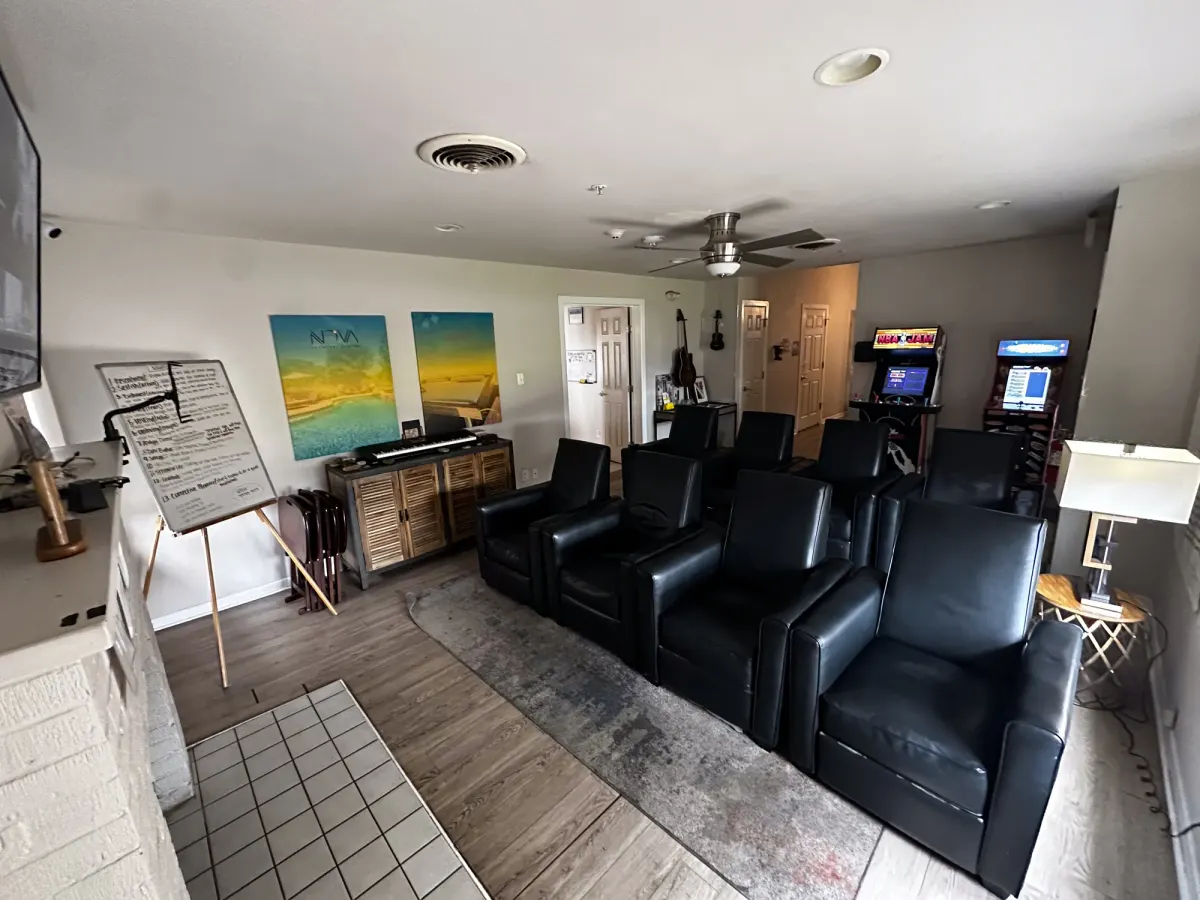 Inpatient
 Austin, TX
11711 N Lamar Blvd · 78753
- 15 beds
- On-site labs
- 24-hour medical staff
Drug & Alcohol Detox in Austin, TX
-
 Inpatient
 Houston, TX
1019 Ashland St · 77008
- On-site labs
- 24-hour medical staff
Drug Detox Center in Houston, TX
-
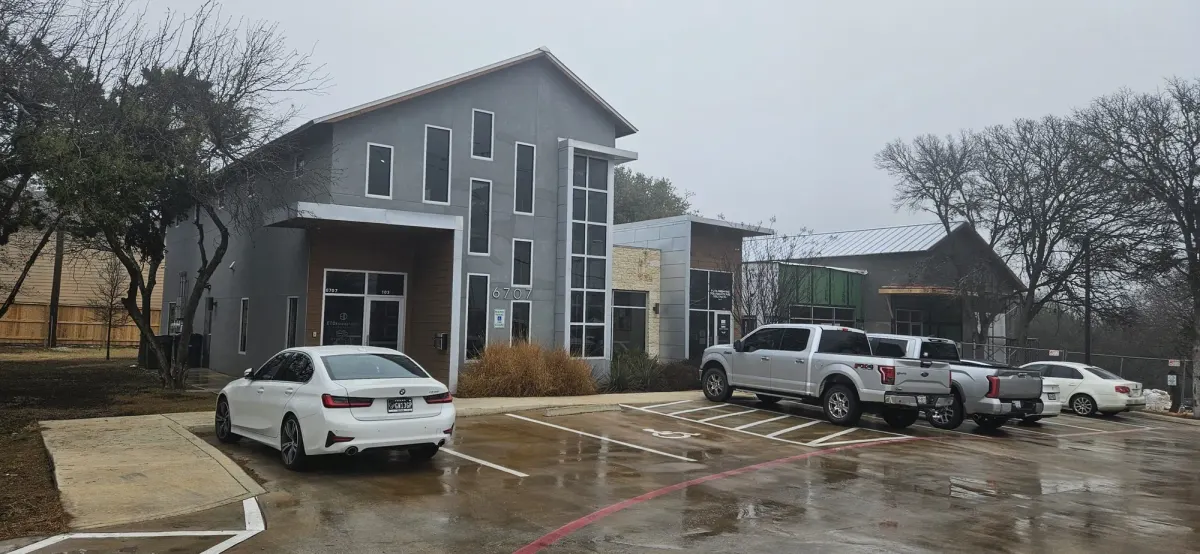 Outpatient
 San Antonio, TX
6707 W Hausman Rd · 78249
- Outpatient detox with scheduled medical visits
- Outpatient treatment
Outpatient Drug & Alcohol Detox in San Antonio
Can you drink alcohol while taking Prozac?
Drinking alcohol on Prozac is not a lethal combination, but the two work against each other.
Both alcohol and fluoxetine act on the central nervous system, so drinking on Prozac tends to increase drowsiness and impair coordination and judgment more than either would alone. Alcohol also worsens depression directly, which undercuts the reason the Prozac was prescribed. And the trial evidence above suggests the combination can increase drinking in some people rather than settle it.
Is Prozac addictive?
No. Fluoxetine does not produce craving or compulsive use, and it is not a controlled substance.
What it does have is a discontinuation syndrome. Stopping abruptly can cause dizziness, flu-like symptoms, irritability, sleep disturbance and unusual sensations sometimes described as brain zaps. That is a physiological adjustment rather than withdrawal from a drug of dependence, and it is a reason to taper with a prescriber — not a reason to think of Prozac as addictive.
Fluoxetine has an unusually long half-life for an SSRI, which makes its discontinuation symptoms milder than most. That is a genuine advantage of this particular one.
Why is Prozac prescribed to people who drink, then?
Prozac is prescribed because depression and alcohol use disorder occur together very often, and the depression is real.
The distinction that matters is what the medication is being asked to do. Treating a depressive disorder in someone who also drinks is a legitimate clinical decision. Expecting that treatment to reduce the drinking is where the evidence does not support the hope — and the timing question, whether to treat the depression before, during or after the drinking is addressed, is exactly the judgment a prescriber has to make with the whole picture in front of them.
It is also genuinely hard to tell, while someone is drinking heavily, how much of the depression is a separate condition and how much is the alcohol. Several weeks of abstinence often answers that question better than any assessment can.
What should you do if you are on Prozac and still drinking?
Do not stop either one on your own, and get the drinking looked at first.
Stopping an antidepressant abruptly brings the discontinuation symptoms above. Stopping alcohol abruptly, if you drink heavily every day, is the more dangerous of the two — withdrawal seizures typically occur 8 to 48 hours after the last drink and delirium tremens can appear up to three to five days later.
That is why the sequence usually runs the other way round from what people expect. Medically supervised alcohol detox handles the part with the physical risk, under monitoring, with your current prescriptions accounted for rather than guessed at. Once drinking has stopped, the question of which medication actually helps — including whether the Prozac is doing what it was meant to — can be answered on evidence instead of assumption.
Our admissions line is answered 24 hours a day, and “I am on an antidepressant and I drink every night” is an ordinary reason to call, not a complicated one.
Common Questions
Does Prozac reduce alcohol cravings?+–
No. Fluoxetine is not approved for alcohol use disorder and trials in people who are still drinking have found worse drinking outcomes on SSRIs, not better. Naltrexone, acamprosate and disulfiram are the three FDA-approved options.
Does Prozac help with alcohol withdrawal?+–
No. Alcohol withdrawal is treated with benzodiazepines under medical supervision, on a symptom-guided schedule. An SSRI has no role in managing the withdrawal itself.
Can Prozac make you drink more?+–
The evidence suggests it can in some people. A randomized trial of 265 people with alcohol use disorder found worse drinking outcomes on citalopram than placebo, and fluoxetine trials have shown increased consumption in more severe cases.
How long after stopping Prozac can you drink alcohol?+–
Fluoxetine has a long half-life and clears slowly over weeks, so there is no single date. The more useful question is usually whether drinking is the thing that needs addressing, which is a conversation with the prescriber rather than a waiting period.
Should I tell the detox center I am taking Prozac?+–
Yes, always, along with the dose and how long you have taken it. Current medications change how withdrawal is managed, and it is one of the first things asked at intake.
Related guides

About the people behind this guide
Anna-Grace Washington
Medical Content Writer
Anna-Grace Washington is a Medical Content Writer for Briarwood Detox Center. She holds a master’s degree in clinical psychology from the University of Texas and brings a strong understanding of behavioral health, addiction recovery, and evidence-based treatment concepts to her writing.
Dr. Robert Ulrich, DO
Medical Director
Dr. Robert Ulrich serves as Medical Director at Briarwood Detox Center, bringing more than two decades of clinical neurology experience to the treatment of substance use disorders. He is board-certified in neurology by the American Board of Psychiatry and Neurology and completed his neurology residency at UT Southwestern Medical Center in Dallas, where he served as Chief Resident.
In network with most major insurance
Find your plan and see what detox would cost
Most plans cover medical detox. Coverage varies by plan, so we verify it for you before you commit to anything.


















Don't see your plan? We work with out-of-network benefits and offer self-pay options — (866) 710-7710
- Confidential
- Takes about 2 minutes
- No obligation to admit

- Accredited The Joint Commission
- Rated 4.7 · 183 Google reviews Flourishing Foundations Recovery, now part of Briarwood
- Admissions 24 hours a day