
Guide
Can You Drink on Librium? What Your Prescription Is Actually Doing
Joint Commission accredited · In network with most major insurance · Admissions answered 24 hours a day

Published August 26, 2026
Most people asking this question were prescribed Librium because of their drinking — it is the classic medication for alcohol withdrawal. Which makes the question stranger and more urgent than it looks: the drug in your hand exists to get you off alcohol, and you are asking whether the two can overlap.
The short answer is no, and the honest answer is that the timing questions underneath it — how long after drinking, how long before — do not have safe do-it-yourself numbers. Here is why.
Why Would a Doctor Give a Drinker a Benzodiazepine?
Because Librium substitutes for alcohol in the brain, on purpose.
Librium is chlordiazepoxide, a long-acting benzodiazepine. Alcohol and benzodiazepines act on the same receptor system, which produces cross-tolerance — a brain adapted to one accepts the other. That is exactly what makes Librium useful: MedlinePlus lists controlling agitation from alcohol withdrawal among its uses, and in supervised detox it is given on a schedule that holds withdrawal off — including the seizure risk — and then steps down to nothing.
So the prescription is not a sedative that happens to be near your drinking. It is a controlled, temporary replacement for the alcohol. Drinking on top of it defeats the mechanism and doubles the load.
What Actually Happens If You Drink on Librium?
Two depressants stack, and the same page that lists Librium’s uses says plainly: do not drink alcohol during treatment.
Both slow breathing and both sedate. Together the effect is more than additive — oversedation, blackouts, memory gaps, falls, and at the far end respiratory depression, which is the mechanism in most benzodiazepine-involved deaths. Alcohol is involved in a large share of them.
There is a second, quieter harm. If the Librium was prescribed for withdrawal, drinking restarts the dependence the taper is dismantling — you end the week needing both drugs instead of neither.
How Long After Drinking Can You Take Librium?
This is the question people actually mean, and the honest answer is that it is a medical judgment, not a number of hours.
Taking a benzodiazepine while alcohol is still in your system is the dangerous direction — the stacking effect above, at its worst. In a detox setting this is exactly why the first dose follows an assessment: staff measure where you are in withdrawal and time the medication to it, rather than guessing against a bottle from last night.
If you have Librium at home and are trying to work out when it is safe to start it yourself after drinking, that is the situation to put in front of a clinician today — it is precisely what a supervised alcohol detox admission is for, and the assessment is a phone call.
Where we are
Detox centers across Texas
Three locations, each with its own admissions line and its own clinical team. Pick the one nearest you — or call and we will tell you which has a bed tonight.
-
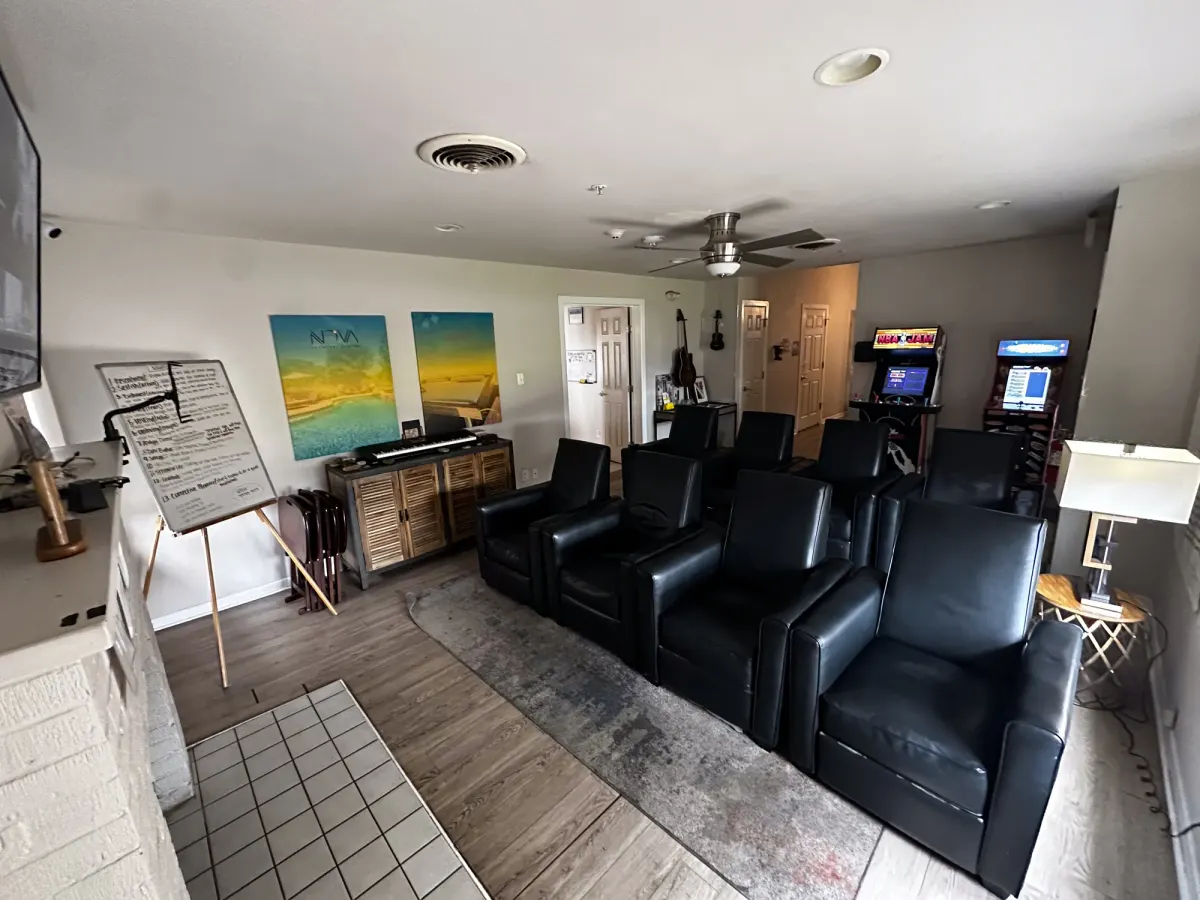 Inpatient
 Austin, TX
11711 N Lamar Blvd · 78753
- 15 beds
- On-site labs
- 24-hour medical staff
Drug & Alcohol Detox in Austin, TX
-
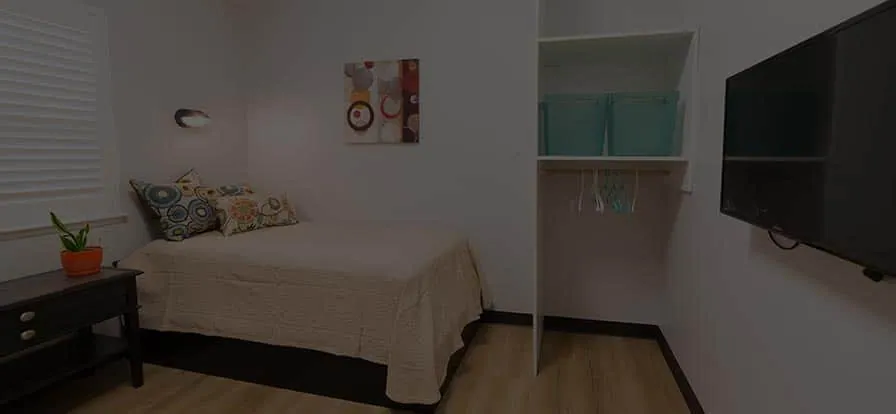 Inpatient
 Houston, TX
1019 Ashland St · 77008
- On-site labs
- 24-hour medical staff
Drug Detox Center in Houston, TX
-
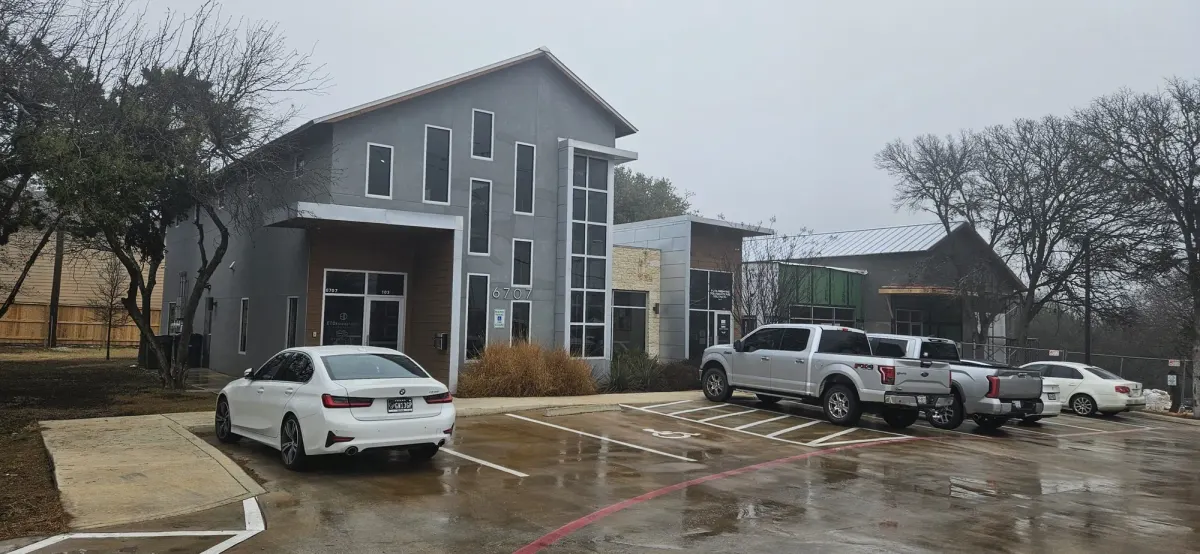 Outpatient
 San Antonio, TX
6707 W Hausman Rd · 78249
- Outpatient detox with scheduled medical visits
- Outpatient treatment
Outpatient Drug & Alcohol Detox in San Antonio
How Long After Taking Librium Can You Drink?
Longer than the prescription lasts — because chlordiazepoxide does not leave when the pills stop.
Librium has one of the longest half-lives in its class, and it breaks down into metabolites that are themselves active for days. A dose taken on Monday is still working well into the week. There is no evening on a Librium taper when the drug is meaningfully “out of your system” and a drink is a separate event.
The truthful version of the answer is a different question: the prescription was written because of alcohol, so “when can I drink again” is really “is the plan to return to drinking” — and that is a conversation for the prescriber, not a clearance window.
Can You Just Stop Librium Instead?
No — and this is the part people get wrong in the other direction.
Stopping a benzodiazepine abruptly after regular use is dangerous in the same way stopping heavy drinking abruptly is dangerous: both carry seizure risk. The FDA’s boxed warning across the benzodiazepine class covers exactly this — physical dependence can develop within days to weeks at prescribed doses, and abrupt discontinuation can produce life-threatening withdrawal.
So someone taking Librium and drinking is holding two things that each need a managed stop, and the combination is a taper question for a clinician. What it is not is a willpower question.
When Is This an Emergency?
Three situations, none of which should wait for an appointment.
Someone on Librium who has been drinking and cannot be woken, is breathing slowly or irregularly, or has blue-tinged lips needs 911 — that is the respiratory depression pathway.
A seizure, in either direction — drinking on top of a missed taper, or an abrupt stop of either substance — is emergency care, not a ride-it-out situation.
And confusion, fever or hallucinations in someone who recently stopped drinking can be delirium tremens, which can begin as late as 96 hours after the last drink.
What to Do If You Are Taking Both Right Now
Say it out loud to a clinician, in that order: what you are prescribed, what you are actually drinking, and when the last of each was.
Nobody at a detox center is scandalized by the combination — it is one of the most common presentations there is, and it changes the medical plan rather than the welcome. The assessment is free, confidential, and answered around the clock, and what to expect covers what an admission actually looks like from the first call.
Common Questions
Is Librium the same as Xanax or Valium?+–
Same class, different speed. Librium is chlordiazepoxide, a long-acting benzodiazepine — closer to Valium than to Xanax, which is short-acting. The long action is why it suits alcohol withdrawal: steadier levels, fewer troughs for symptoms to break through.
Can one drink on Librium hurt you?+–
It can, because the interaction is about the combined depressant load, not the count. One heavy pour on a full Librium dose can produce the oversedation and coordination problems that end in falls and blackouts — and it restarts the drinking the prescription was treating.
How long does Librium stay in your system?+–
Days, and longer with regular use — chlordiazepoxide's active metabolites persist well after the last dose. That is a feature during a withdrawal taper and the reason there is no quick "clear window" for drinking after it.
Why do detox centers use Librium for alcohol withdrawal?+–
Cross-tolerance. It calms the same receptor system alcohol was suppressing, which holds off withdrawal symptoms and lowers seizure risk while the dose is stepped down on a schedule. Supervision is the point — the same drug self-managed at home, alongside drinking, is how the combination on this page happens.
Is Librium addictive?+–
It carries the same dependence risk as the rest of its class, which is why it is a Schedule IV controlled substance and why courses are short and tapered. Physical dependence can develop within weeks even at prescribed doses — that is dependence, not misuse, and it still needs a managed stop.
What if I already drank while on it?+–
Do not take the next dose on your own judgment, and do not stop the medication abruptly either. Call the prescriber, or a detox line if you cannot reach them, and say exactly what you took and drank and when. If anything in the emergency list above is happening, it is 911 rather than a phone call.
Related guides
About the people behind this guide
Anna-Grace Washington
Medical Content Writer
Anna-Grace Washington is a Medical Content Writer for Briarwood Detox Center. She holds a master’s degree in clinical psychology from the University of Texas and brings a strong understanding of behavioral health, addiction recovery, and evidence-based treatment concepts to her writing.
Dr. Robert Ulrich, DO
Medical Director
Dr. Robert Ulrich serves as Medical Director at Briarwood Detox Center, bringing more than two decades of clinical neurology experience to the treatment of substance use disorders. He is board-certified in neurology by the American Board of Psychiatry and Neurology and completed his neurology residency at UT Southwestern Medical Center in Dallas, where he served as Chief Resident.
In network with most major insurance
Find your plan and see what detox would cost
Most plans cover medical detox. Coverage varies by plan, so we verify it for you before you commit to anything.









Don't see your plan? We work with out-of-network benefits and offer self-pay options — (866) 710-7710
- Confidential
- Takes about 2 minutes
- No obligation to admit
- Accredited The Joint Commission
- Rated 4.7 · 183 Google reviews Flourishing Foundations Recovery, now part of Briarwood
- Admissions 24 hours a day