
Guide
Does Insurance Cover Medical Detox and Rehab Programs in Austin, Texas?
Joint Commission accredited · In network with most major insurance · Admissions answered 24 hours a day


Published April 20, 2026
Reviewed and updated July 29, 2026
Why Insurance Is Required to Cover Addiction Treatment
Many people don’t realize that insurance coverage for addiction treatment isn’t just a courtesy — it’s the law. Two landmark pieces of legislation have shaped what insurance companies are required to cover:
- The Mental Health Parity and Addiction Equity Act (MHPAEA) of 2008 requires most insurance plans to cover mental health and substance use disorder treatment at the same level as medical or surgical care. In other words, if your plan covers hospitalization for a physical illness, it must offer comparable coverage for medical detox.
- The Affordable Care Act (ACA) classified substance use disorder treatment as one of ten essential health benefits, meaning all marketplace plans sold in Texas must include some level of addiction treatment coverage.
These protections mean that most people with private insurance, Medicaid, or marketplace plans have meaningful coverage for detox and rehab — even if the details vary from plan to plan.
What Does Insurance Typically Cover for Medical Detox in Austin?
When it comes to medical detox, insurance coverage typically falls into a few categories. Here’s what most plans will cover to some degree:
- Medical detox (inpatient): This is the supervised withdrawal process that takes place in a licensed facility. Because detox from alcohol, opioids, or benzodiazepines can be medically dangerous, most insurance plans recognize inpatient detox as a medically necessary service.
- Medication-assisted treatment (MAT): Medications like buprenorphine, methadone, or naltrexone are commonly used during detox to ease withdrawal symptoms and reduce cravings. Many insurance plans cover these medications when prescribed as part of a treatment plan.
- Residential rehabilitation: After detox, many people transition to a residential rehab program. Coverage for residential treatment varies more widely by plan, but it is included in many private and ACA marketplace plans.
- Partial hospitalization programs (PHP) and intensive outpatient programs (IOP): These step-down levels of care are often well-covered by insurance and can serve as a bridge between inpatient detox and returning to daily life.
- Behavioral health therapy: Individual and group counseling, cognitive behavioral therapy (CBT), and other therapeutic services are typically included under behavioral health benefits.
To learn more about what the detox process looks like at a medical facility in Austin, visit our drug detox Austin page for a detailed overview of services and what to expect.
Does Texas Medicaid Cover Detox and Rehab?
If you’re uninsured or low-income, Texas Medicaid (administered through HHSC) may be an option, though Texas has some of the most limited Medicaid eligibility in the country. Here’s what you should know:
- Texas has not expanded Medicaid under the ACA, which means many working-age adults without dependents do not qualify, even with low incomes.
- If you do qualify for Texas Medicaid — for example, as a parent with low income, a pregnant woman, or a person with a disability — substance use disorder treatment including detox is a covered benefit.
- The Texas Health and Human Services Commission (HHSC) also funds some community-based treatment programs through block grants, which may provide services on a sliding-scale or no-cost basis for those who don’t qualify for Medicaid.
Where we are
Detox centers across Texas
Three locations, each with its own admissions line and its own clinical team. Pick the one nearest you — or call and we will tell you which has a bed tonight.
-
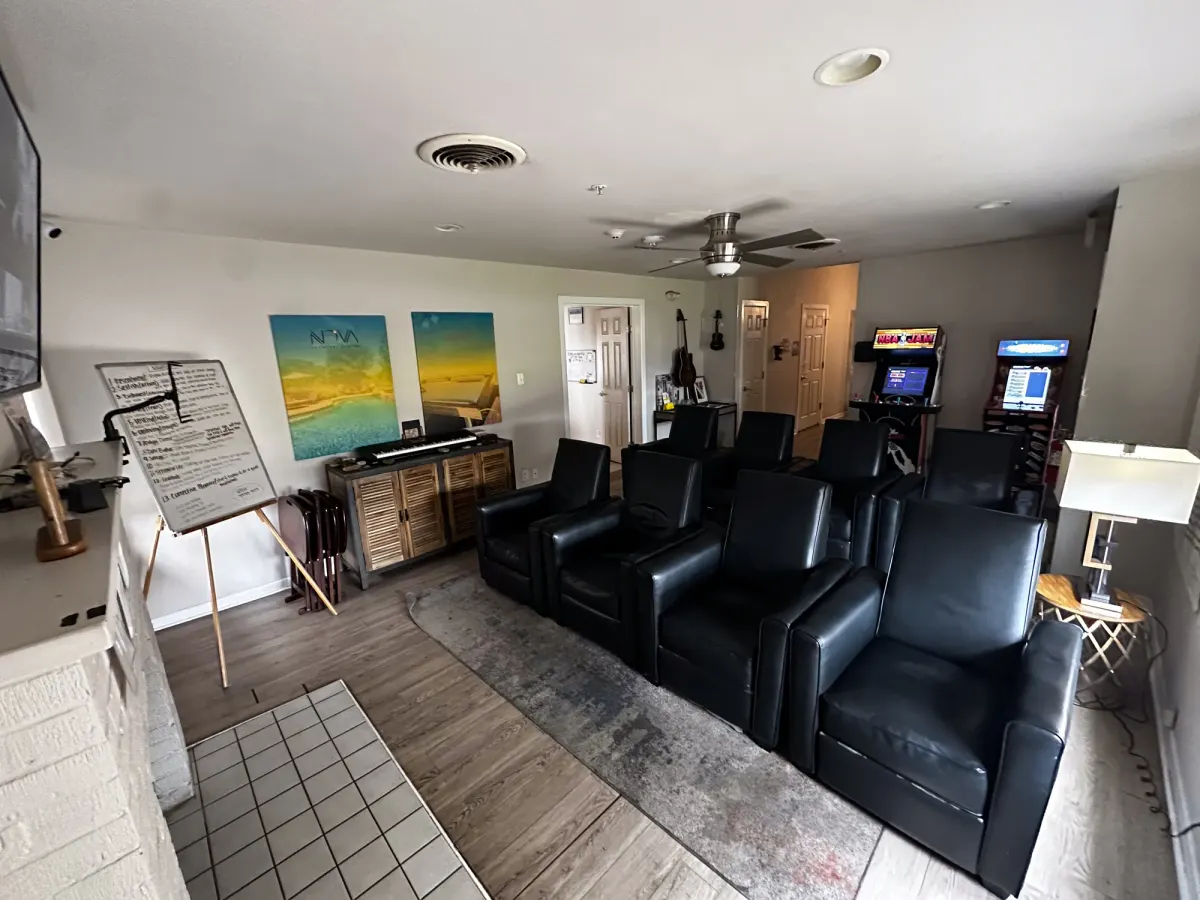 Inpatient
 Austin, TX
11711 N Lamar Blvd · 78753
- 15 beds
- On-site labs
- 24-hour medical staff
Drug & Alcohol Detox in Austin, TX
-
 Inpatient
 Houston, TX
1019 Ashland St · 77008
- On-site labs
- 24-hour medical staff
Drug Detox Center in Houston, TX
-
 Outpatient
 San Antonio, TX
6707 W Hausman Rd · 78249
- Outpatient detox with scheduled medical visits
- Outpatient treatment
Outpatient Drug & Alcohol Detox in San Antonio
How to Verify Your Insurance Benefits Before Starting Treatment
Before you commit to a detox or rehab program in Austin, it’s worth taking the time to verify exactly what your insurance will cover. This prevents unexpected bills and helps you plan your recovery journey with clarity. Here’s how to do it:
- Call the member services number on the back of your insurance card. Ask specifically about your substance use disorder benefits, including inpatient detox, residential rehab, PHP, and IOP coverage.
- Ask about in-network vs. out-of-network providers. Using an in-network facility will almost always result in lower out-of-pocket costs. Ask if your preferred facility is in-network with your plan.
- Understand your deductible, copay, and out-of-pocket maximum. Even with coverage, you may have a deductible to meet before insurance kicks in. Knowing your out-of-pocket maximum helps you understand the worst-case financial scenario.
- Ask about prior authorization requirements. Some insurance plans require pre-approval (prior authorization) before they will cover inpatient detox or residential treatment. This can usually be handled by the treatment facility’s admissions team on your behalf.
- Let the treatment center verify for you. Most reputable detox centers, including Briarwood, will conduct a free insurance verification on your behalf so you know exactly what’s covered before you arrive.
What If Insurance Doesn’t Cover Everything? Understanding Your Out-of-Pocket Costs
Even with strong insurance coverage, there may be some costs that fall to you. Understanding these upfront helps you prepare:
- Deductibles: The amount you pay before insurance begins covering costs. If you haven’t met your deductible for the year, you’ll pay that first.
- Copays and coinsurance: A set fee or percentage you pay for each service or day of treatment, even after your deductible is met.
- Non-covered services: Some amenities or alternative therapies may not be covered under your plan. Briarwood offers therapies and holistic support during detox — some of which may be covered and some may not, depending on your plan.
- Out-of-pocket maximum: Once you hit this annual cap, insurance covers 100% for the rest of the year. If you’re starting treatment early in the year, you may reach this limit during a longer stay.
Alcohol Detox in Austin: Special Considerations for Coverage
Alcohol withdrawal is one of the most medically serious forms of detox, with risks including seizures and a life-threatening condition called delirium tremens (DTs). Because of these medical risks, alcohol detox is almost universally recognized by insurance companies as medically necessary — which means coverage approval rates are typically high. If you or a loved one is dependent on alcohol, a medically supervised detox is not just recommended — it can be life-saving. Most insurance plans will cover inpatient alcohol detox when medically necessary, and the clinical team at the facility can document that necessity on your behalf during the authorization process. Learn more about what to expect from alcohol detox in Austin and how Briarwood’s medical team supports you safely through the withdrawal process.
How Briarwood Detox Center Works With Your Insurance
At Briarwood Detox Center in Austin, Texas, we understand that navigating insurance can feel overwhelming — especially when you’re already dealing with the stress of addiction and the urgency of getting help. That’s why our admissions team handles the heavy lifting for you. Here’s what you can expect when you reach out:
- Free, confidential insurance verification: We’ll contact your insurance provider directly and find out exactly what’s covered for your specific plan before you make any decisions.
- Prior authorization assistance: If your plan requires pre-approval, we’ll work with your insurer to submit documentation and get the authorization process started quickly.
- Transparent cost communication: Before you begin treatment, we’ll walk you through your expected out-of-pocket costs so there are no surprises.
- In-network partnerships: Briarwood works with many major insurance carriers, which helps reduce your costs and streamline the approval process.
- Flexible options: If insurance falls short, we’ll explore all available options with you, including payment arrangements.
Recovery shouldn’t be delayed because of financial uncertainty. Whether you’re just beginning to explore your options or you’re ready to start treatment today, our team is here to help you understand your coverage and take the next step.
Take the Next Step — Your Insurance May Cover More Than You Think
Frequently Asked Questions
Does insurance cover medical detox and rehab programs in Austin, Texas?+–
Yes, most insurance plans do cover medical detox and rehab programs in Austin, Texas. Federal laws like the Mental Health Parity and Addiction Equity Act (MHPAEA) and the Affordable Care Act (ACA) require most private, Medicaid, and marketplace plans to include meaningful coverage for addiction treatment. The exact benefits vary by plan, so it's important to verify your specific coverage before beginning treatment.
What types of addiction treatment does insurance typically cover?+–
Most insurance plans cover a range of addiction treatment services, including inpatient medical detox, medication-assisted treatment (MAT), residential rehabilitation, partial hospitalization programs (PHP), and intensive outpatient programs (IOP). Behavioral health therapies such as individual counseling, group therapy, and cognitive behavioral therapy (CBT) are also typically included under behavioral health benefits. Coverage levels vary depending on your specific plan.
Is medical detox considered medically necessary by insurance companies?+–
Yes, most insurance companies recognize inpatient medical detox as a medically necessary service. This is especially true for detox from substances like alcohol, opioids, or benzodiazepines, where unsupervised withdrawal can be physically dangerous. Because it meets the standard of medical necessity, detox is one of the most consistently covered levels of addiction care.
Are medications used during detox, like buprenorphine or naltrexone, covered by insurance?+–
Many insurance plans cover medication-assisted treatment (MAT) medications such as buprenorphine, methadone, and naltrexone when they are prescribed as part of a formal addiction treatment plan. These medications help ease withdrawal symptoms and reduce cravings, making them an important part of the detox process. Check with your insurance provider to confirm your specific medication coverage.
Does the Affordable Care Act require insurance to cover rehab in Texas?+–
Yes, the Affordable Care Act classified substance use disorder treatment as one of ten essential health benefits, which means all ACA marketplace plans sold in Texas must include some level of addiction treatment coverage. Combined with the Mental Health Parity and Addiction Equity Act, these laws ensure that insurance plans must cover addiction treatment comparably to other medical or surgical care. This means most Texans with marketplace or private insurance have legal protections guaranteeing some level of rehab coverage.
How can I find out how much of my detox or rehab costs insurance will cover?+–
The best way to understand your benefits is to verify your insurance coverage directly with the treatment facility or your insurance provider before starting care. You should ask about your deductible, copays, out-of-pocket maximums, and whether the facility is in-network. Many detox centers, including Briarwood Detox Center, can help you review your benefits and answer questions about what your plan will cover. Ready to Start Your Recovery in Austin? If you or someone you love needs more than detox, Briarwood Detox Center also provides drug rehab austin . Does your insurance cover detox in Austin? Find out in about 2 minutes — free, confidential, no obligation. Verify Insurance Briarwood Detox Center offers medically supervised detox in Austin. Explore our locations, see the facility, and verify your insurance in minutes. Ready to talk to someone now? Briarwood Detox Center's admissions team is here 24/7, and every call is confidential. Call (866) 710-7710 . See our locations
Related guides


About the people behind this guide
Anna-Grace Washington
Medical Content Writer
Anna-Grace Washington is a Medical Content Writer for Briarwood Detox Center. She holds a master’s degree in clinical psychology from the University of Texas and brings a strong understanding of behavioral health, addiction recovery, and evidence-based treatment concepts to her writing.
Dr. Robert Ulrich, DO
Medical Director
Dr. Robert Ulrich serves as Medical Director at Briarwood Detox Center, bringing more than two decades of clinical neurology experience to the treatment of substance use disorders. He is board-certified in neurology by the American Board of Psychiatry and Neurology and completed his neurology residency at UT Southwestern Medical Center in Dallas, where he served as Chief Resident.
In network with most major insurance
Find your plan and see what detox would cost
Most plans cover medical detox. Coverage varies by plan, so we verify it for you before you commit to anything.















Don't see your plan? We work with out-of-network benefits and offer self-pay options — (866) 710-7710
- Confidential
- Takes about 2 minutes
- No obligation to admit

- Accredited The Joint Commission
- Rated 4.5 · 95 Google reviews
- Admissions 24 hours a day