
Guide
Benzo Detox in Texas: Where to Get It, What Happens, and How Long It Takes
Joint Commission accredited · In network with most major insurance · Admissions answered 24 hours a day


Published September 7, 2026
People searching for a benzo rehab in Texas are usually not looking for a definition. They are on Xanax, Klonopin, Valium or Ativan, they know they cannot simply stop, and they want to know where to go and what will happen when they get there. This page answers that in order: where, what, how long, and what it costs.
Where can you get benzo detox in Texas?
Briarwood runs medically supervised benzodiazepine detox at two inpatient centers, in Austin and Houston, and an outpatient program in San Antonio, all under the same protocol.
The Austin center is at 11711 N Lamar Blvd in North Austin, and the Houston center is at 1019 Ashland Street in the Greater Heights. Both are licensed medical detox facilities with nursing on site around the clock, and which one you go to is usually decided by where you live and which has a bed that day. San Antonio is outpatient only, which for benzodiazepines means a slower taper with scheduled visits rather than a stay, and the section on outpatient below covers when that is and is not the right fit.
“Benzo rehab” and “benzo detox” get used interchangeably in search, and they are not the same thing. Detox is the medical part: the supervised taper that gets the drug out of your system without a seizure. Rehab is the treatment that follows. Briarwood is a detox center first, and arranges the step after before you leave. The benzodiazepine detox program page has the clinical detail; the Austin and Houston pages have the buildings.
Why can’t you just stop taking benzos?
You cannot just stop taking benzos because an abrupt stop, or a dose cut that is too fast, can cause withdrawal seizures that the FDA’s boxed warning calls potentially life-threatening.
That warning was added to the entire benzodiazepine class in September 2020, and it is worth reading what it actually says. Physical dependence can develop after days or weeks of use at prescribed doses. Stopping abruptly or reducing too quickly can produce withdrawal reactions, including seizures, which can be life-threatening. The FDA’s instruction to prescribers is a gradual taper with a patient-specific plan, because no single tapering schedule suits everyone.
This is what separates benzodiazepines from most other drugs people detox from. Opioid withdrawal is miserable and rarely dangerous. Benzodiazepine withdrawal, like alcohol withdrawal, can kill, and it does so through the same mechanism: a nervous system that has spent months being sedated, suddenly running with nothing holding it down.
Source: FDA requiring Boxed Warning updated to improve safe use of benzodiazepine drug class, U.S. Food and Drug Administration, September 2020.
What does medical benzo detox actually do?
Medical benzo detox replaces an abrupt stop with a controlled descent. A physician sets the taper, nursing watches the numbers around the clock, and medication keeps the nervous system below the seizure threshold while the dose comes down.
The standard approach, described in SAMHSA’s detoxification protocol, is to move a person from a short-acting benzodiazepine onto a long-acting one, or onto phenobarbital at a calculated equivalent dose, and then reduce that in steps. A long-acting drug leaves the body slowly, which turns a cliff into a slope. Vital signs, sleep, anxiety and tremor are tracked at intervals so that a step that was too large is caught before it becomes a seizure rather than after.
What that looks like from the bed is less dramatic than it sounds: a daily dose that gets a little smaller, a nurse who checks on you more often than you expect, and a physician who has done this many times deciding the pace. The medications used in benzo detox page goes into the specific drugs for anyone who wants that depth.
Source: Physical Detoxification Services for Withdrawal From Specific Substances, TIP 45, Substance Abuse and Mental Health Services Administration.
Where we are
Detox centers across Texas
Three locations, each with its own admissions line and its own clinical team. Pick the one nearest you — or call and we will tell you which has a bed tonight.
-
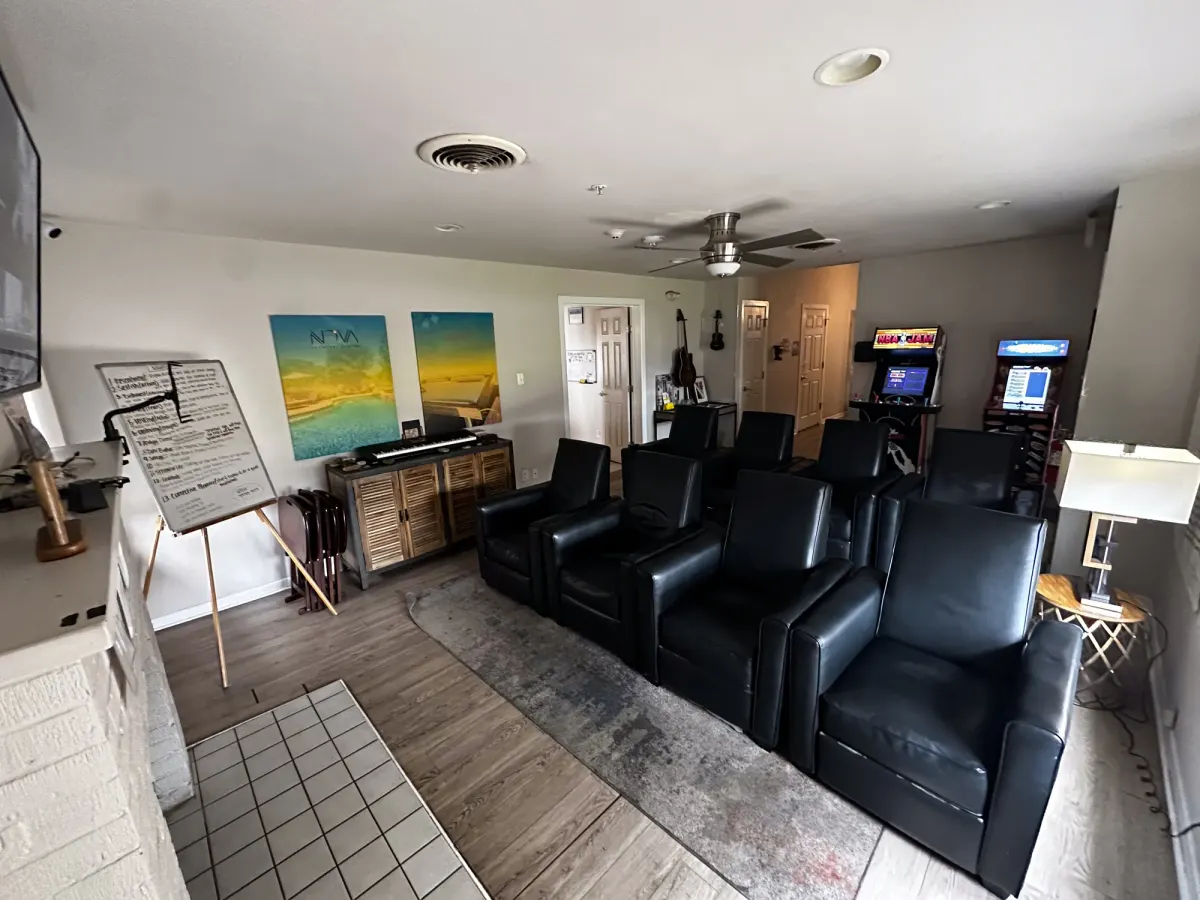 Inpatient
 Austin, TX
11711 N Lamar Blvd · 78753
- 15 beds
- On-site labs
- 24-hour medical staff
Drug & Alcohol Detox in Austin, TX
-
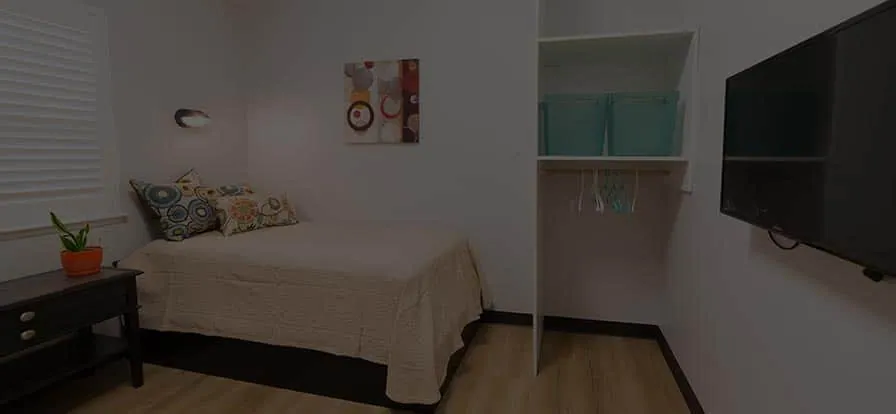 Inpatient
 Houston, TX
1019 Ashland St · 77008
- On-site labs
- 24-hour medical staff
Drug Detox Center in Houston, TX
-
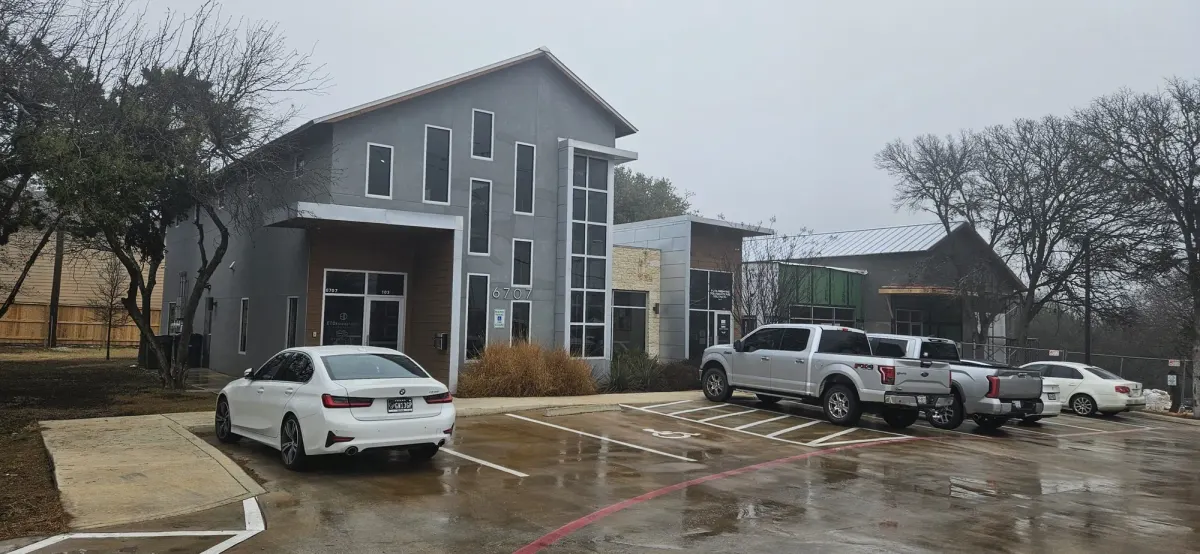 Outpatient
 San Antonio, TX
6707 W Hausman Rd · 78249
- Outpatient detox with scheduled medical visits
- Outpatient treatment
Outpatient Drug & Alcohol Detox in San Antonio
How long does benzo detox take?
Most detox stays at Briarwood run five to seven days, but benzodiazepine tapers are the ones most likely to run longer, and the honest answer depends on which drug and for how long.
The timeline is set by the drug’s half-life. With a short-acting benzodiazepine such as Xanax or Ativan, withdrawal symptoms can begin 6 to 8 hours after the last dose and usually fade within 10 to 14 days. With a long-acting one such as Valium or Klonopin, symptoms may not appear for 1 to 4 days, tend to peak at 10 to 14 days, and can last up to four weeks. Insomnia and anxiety are the symptoms people find hardest, and they peak early.
Two things follow from that. A person on a long-acting benzodiazepine can feel fine on day two of detox and be at their worst on day ten, which is why the length of stay is decided after the medical assessment rather than quoted on the phone. And the FDA notes that some people experience withdrawal symptoms lasting many months after the acute phase, which is not a reason to stop tapering but a reason to have treatment arranged for afterward.
Is outpatient benzo detox an option?
Outpatient benzo detox is an option for some people, and San Antonio is where Briarwood does it: a supervised taper with scheduled medical check-ins rather than an overnight stay.
Outpatient works when the dose is moderate, there is no history of withdrawal seizures, there is no heavy alcohol or opioid use alongside, and there is a stable place to live with someone else in it. It fails when any of those is missing, because the whole safety of a taper rests on someone noticing a problem between visits. The assessment at the start is what decides it, and the San Antonio outpatient detox page explains how the visits are structured. If you have tapered on your own before and it did not hold, the Klonopin taper page explains why that is so common and not a personal failure.
What does benzo detox cost in Texas?
Benzo detox at Briarwood costs $900 a day as inpatient care in Austin and Houston, or $4,500 to $6,300 for a typical five to seven day stay. A taper that runs longer costs the same daily rate for the extra days.
With insurance, most people pay between $0 and $5,000 out of pocket depending on their plan, and the benefit check takes a couple of minutes on the phone. Medications and labs are billed separately from the daily rate. The complete price list, the exclusions, and the outpatient figures are on how much detox costs. Briarwood does not bill Medicaid or Medicare; TRICARE and VA benefits are accepted.
What if you are also drinking, or taking opioids?
If you are also drinking or taking opioids, tell admissions on the first call, because alcohol and benzodiazepines withdraw through the same pathway and together make the taper both more urgent and more careful.
Alcohol and benzodiazepines are cross-tolerant: each one masks withdrawal from the other, so a person who stops both at once faces a combined syndrome that is harder to predict. Opioids add a different problem, a severe withdrawal of their own that has to be managed in parallel. Neither combination rules out detox. Both change the plan, and both are the kind of thing that turns an outpatient candidate into an inpatient one. The alcohol and benzo cross-tolerance and opioid and benzo detox pages cover each case.
What happens after benzo detox?
The taper ends, the anxiety the benzodiazepine was prescribed for usually has not, and the step after detox is where that gets treated rather than medicated away.
For most people that means intensive outpatient treatment, several sessions a week while living at home, where the underlying anxiety or insomnia is worked on with a clinician and, where appropriate, non-benzodiazepine medication. Briarwood arranges that step before discharge, because the weeks after a benzo taper are when the pull back toward the prescription is strongest and the protracted symptoms the FDA describes are most likely to be mistaken for the original condition returning.
If you are reading this because you are on a benzodiazepine and want off it, the one thing not to do is stop today. Call, describe the drug, the dose and how long, and a nurse will tell you whether this is a detox admission, an outpatient taper, or a conversation with your prescriber.
Common Questions
Where is the best place to detox from benzos in Texas?+–
Any licensed medical detox with 24-hour nursing and a physician-directed taper. Briarwood runs that in Austin and Houston as inpatient care and in San Antonio as outpatient, under the same protocol. Which is right depends on the drug, the dose, and whether alcohol or opioids are also involved.
Can you detox from benzos at home?+–
Not safely if you have been taking them daily for more than a few weeks. Abrupt stopping or a fast cut can cause seizures, which the FDA describes as potentially life-threatening. A taper set and monitored by a physician is the safe route, and for some people that taper can be outpatient.
How long does benzo withdrawal last?+–
Acute symptoms fade within 10 to 14 days for short-acting benzodiazepines and up to four weeks for long-acting ones. Some people have milder symptoms for months afterward, which is why treatment after detox matters.
Does insurance cover benzo detox?+–
Most commercial plans do, and out-of-pocket costs at Briarwood run from $0 to $5,000 depending on the plan. TRICARE and VA are accepted. Medicaid and Medicare are not.
Do you take people who were prescribed benzos, not misusing them?+–
Yes. Physical dependence develops at prescribed doses, and a large share of benzodiazepine detox is people whose prescription became a dependence. The taper is the same; the conversation with your prescriber is part of the plan.
Related guides


About the people behind this guide
Anna-Grace Washington
Medical Content Writer
Anna-Grace Washington is a Medical Content Writer for Briarwood Detox Center. She holds a master’s degree in clinical psychology from the University of Texas and brings a strong understanding of behavioral health, addiction recovery, and evidence-based treatment concepts to her writing.
Dr. Robert Ulrich, DO
Medical Director
Dr. Robert Ulrich serves as Medical Director at Briarwood Detox Center, bringing more than two decades of clinical neurology experience to the treatment of substance use disorders. He is board-certified in neurology by the American Board of Psychiatry and Neurology and completed his neurology residency at UT Southwestern Medical Center in Dallas, where he served as Chief Resident.
In network with most major insurance
Find your plan and see what detox would cost
Most plans cover medical detox. Coverage varies by plan, so we verify it for you before you commit to anything.


















Don't see your plan? We work with out-of-network benefits and offer self-pay options — (866) 710-7710
- Confidential
- Takes about 2 minutes
- No obligation to admit

- Accredited The Joint Commission
- Rated 4.5 · 95 Google reviews
- Admissions 24 hours a day