
Table of Contents
Key Takeaways
- Alcohol detox supplements can support comfort, but they cannot prevent dangerous withdrawal complications.
- Thiamine, magnesium, and basic nutrition support are common considerations when a clinician says supplements are appropriate.
- Avoid proprietary “detox blends,” high-dose products, and sedating herbs that can raise risk during withdrawal.
- Use a simple routine: hydration, gentle foods, symptom tracking, and limited supplement stacking.
- Know the red flags: confusion, seizures, severe vomiting, and worsening symptoms require urgent medical care.
- Briarwood provides supervised detox and next-step planning in Austin, San Antonio, and Houston.
Break Free from Addiction. Detox Safely in Austin Today.
Medically Supervised Detox – Compassionate Care Starts Here.
Searching for alcohol detox supplements is common when you want relief from alcohol withdrawal symptoms and a smoother start to sobriety. However, supplements are not a detox plan by themselves. In fact, alcohol withdrawal can become dangerous fast, especially after heavy or long-term drinking.
This guide explains which supplements for alcohol withdrawal may support hydration, nutrition, and sleep during early recovery. It also explains what to avoid, what “red flag” symptoms mean, and how medically supervised detox can keep you safe while your body stabilizes.
If you are considering detox in Texas, Briarwood offers care in Austin, San Antonio, and Houston.


What Alcohol Detox Supplements Can and Cannot Do
Alcohol detox supplements can help your body rebuild after alcohol has strained hydration, sleep, and nutrition. For example, they may support appetite, replenish certain nutrients, or reduce cramping. Still, they cannot prevent serious withdrawal complications like seizures or delirium.
That matters because withdrawal is not just “feeling rough.” It is a rebound effect in the brain and body after alcohol is removed. The risk is higher if you drank daily, drank heavily, had past withdrawals, or have medical conditions.
In other words, supplements can be supportive, but they should be treated as “add-ons.” If withdrawal could be moderate or severe, the safest plan is medical detox with monitoring and symptom-based care. MedlinePlus summarizes how alcohol withdrawal can range from mild symptoms to more severe complications. https://medlineplus.gov/ency/article/000764.htm
Core Nutrients Often Considered During Alcohol Withdrawal
Many people in early recovery have nutrition gaps because alcohol can reduce intake, impair absorption, and increase losses. Because of that, the most practical supplements for alcohol withdrawal often focus on basic deficiencies rather than “detox gimmicks.”
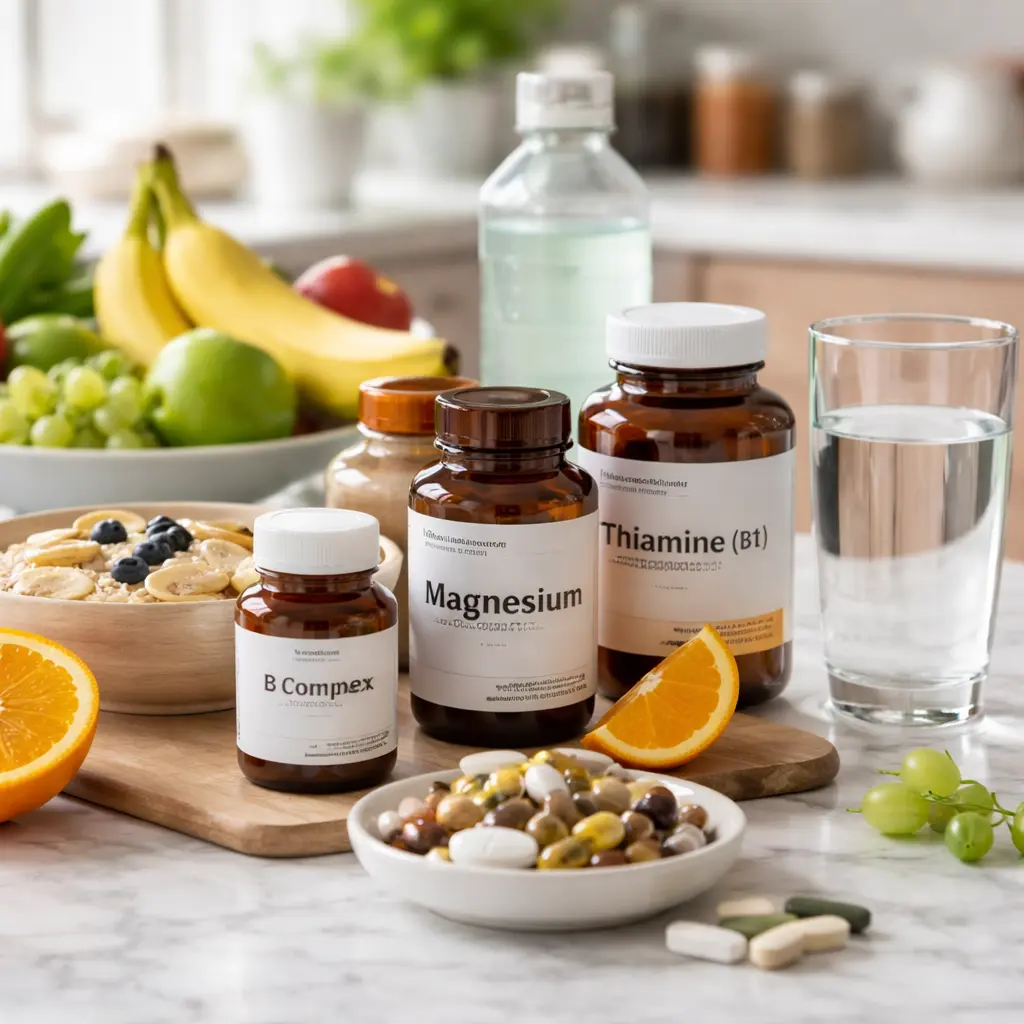
Thiamine (Vitamin B1)
Thiamine is frequently discussed because heavy drinking can increase deficiency risk. Clinicians often prioritize thiamine to help protect the brain and nervous system during alcohol recovery. For background on thiamine’s role in alcohol use and related risks, the National Institutes of Health has an overview through NCBI. https://www.ncbi.nlm.nih.gov/books/NBK441882/
Magnesium
Magnesium is commonly depleted in people who have used alcohol heavily. It may support muscle function, sleep quality, and overall comfort. However, dose and form matter, and it can interact with certain medications or cause diarrhea in higher amounts.
Folate and other B vitamins
Folate and broader B vitamin support may be considered if diet has been inconsistent. Still, more is not always better. A balanced approach is usually safest, especially if you have liver concerns.
Electrolytes and fluids
Hydration support is often more useful than another pill. Electrolyte fluids can help if you are sweating, vomiting, or not eating much. Even so, ongoing vomiting or confusion is a medical warning sign, not a “hydrate and hope” situation.
Supplement Safety: What to Avoid During Detox
During withdrawal, your nervous system can be sensitive and unpredictable. Therefore, it is smart to avoid products that add risk, sedation, or stimulant effects.
Avoid “proprietary detox blends” with unclear doses
If a label hides amounts inside a blend, you cannot judge safety. Also, these formulas may combine multiple herbs that affect blood pressure, sleep, or the liver.
Be cautious with sedating herbs and sleep aids
Some over-the-counter sleep products can cause next-day grogginess, worsen dizziness, or interact with prescribed medications. Withdrawal-related insomnia is real, but it deserves careful management rather than stacking sedatives.
Avoid high-dose supplements if you have liver disease
Alcohol can stress the liver, and some supplements are metabolized there. High-dose vitamin A, niacin, kava, and certain concentrated herbal extracts can be risky. If you have known liver problems or yellowing skin, medical guidance is essential.
Do not use supplements to “push through” severe symptoms
If you have shaking that is worsening, confusion, hallucinations, or a history of seizures, supplements are not an appropriate solution. Those signs require urgent medical attention.
Break Free from Addiction. Detox Safely in Austin Today.
Medically Supervised Detox – Compassionate Care Starts Here.
How to Use Supplements as Part of a Supportive Detox Routine
If your withdrawal risk is low and a clinician has confirmed it is safe to detox outside a medical setting, supplements may fit into a structured routine. The goal is comfort and stability, not “speed.”
Start with food first when possible
Easy-to-digest meals can reduce nausea and support blood sugar. For example, soups, oatmeal, bananas, yogurt, and rice can be gentler than heavy meals. Then, supplements can fill gaps if appetite is limited.
Keep the stack simple
A small, basic plan is often safer than a long list. In many cases, that means hydration support plus clinician-recommended vitamins. If you add too many products, it becomes harder to spot what is helping or harming.
Track symptoms in plain language
Write down sleep hours, tremor level, sweating, nausea, heart rate sensations, and mood changes. This makes it easier to notice worsening patterns and to communicate clearly if you need help.
Prioritize sleep hygiene
While sleep may be disrupted, routines can still help. Dim lights at night, limit caffeine, and keep the room cool. Supplements are secondary to environment and consistency.
If you want a safer, more supported start, Briarwood’s admissions team can explain what monitored detox looks like and what to expect. You can begin here: https://www.briarwooddetox.com/admissions/
When Alcohol Withdrawal Symptoms Mean You Need Medical Detox
Supplements may be appropriate for mild discomfort, but some alcohol withdrawal symptoms signal medical risk. If any of the signs below appear, seek urgent care.
- Seizure activity, fainting, or severe shaking
- Confusion, hallucinations, or extreme agitation
- Chest pain, trouble breathing, or an irregular heartbeat sensation
- Uncontrolled vomiting, dehydration, or inability to keep fluids down
- High fever, severe sweating, or rapidly worsening symptoms
Withdrawal timing can vary, and symptoms can escalate quickly depending on drinking history and health. If you want to understand how long symptoms can last and why timelines differ, see: https://www.briarwooddetox.com/our-programs/alcohol-detox/how-long-does-alcohol-withdrawal-last/
Briarwood Detox Support: Safe Stabilization, Then a Real Recovery Plan
People often look for alcohol detox supplements because they want relief and control. That makes sense. Still, the safest path usually combines medical oversight with practical supports like hydration, nutrition, rest, and compassionate care.
At Briarwood, detox is designed to stabilize alcohol withdrawal symptoms safely, while your care team monitors changes and adjusts support based on what your body is doing in real time. Then, you can transition into next-step planning that supports long-term recovery, not just short-term symptom relief.
If you are ready to talk through options, including location and timing, Call our admissions team today at (888) 857-0557.
For additional education on nutrition considerations during alcohol withdrawal, the University of Virginia’s GI Nutrition resource discusses common deficiencies and why targeted repletion matters. https://med.virginia.edu/ginutrition/wp-content/uploads/sites/199/2021/06/Alcohol-Withdrawal-June-2021.pdf
Our Other Briarwood Alcohol and Drug Rehab Locations
Medical Disclaimer
Building a Safer Plan for Alcohol Withdrawal Support Beyond Supplements
FAQ: Alcohol Detox Supplements, Withdrawal Help, and Next Steps in Austin
What are alcohol detox supplements, and do they actually stop withdrawal symptoms?
What vitamins are commonly used as supplements for alcohol withdrawal?
Can magnesium help with alcohol withdrawal, and is it safe to take during detox?
What supplements should you avoid during alcohol detox?
Is it safe to detox from alcohol at home using supplements?
When should alcohol withdrawal symptoms be treated with medical detox instead of supplements?
How long do alcohol withdrawal symptoms last, and do supplements change the timeline?
What should I eat and drink during alcohol detox if I feel nauseated or shaky?
What happens after detox, and what Austin recovery resources should I plan for next?
Does insurance cover alcohol detox in Austin, and what does verification involve?
Related Blog Posts

When someone is in active addiction, information alone rarely changes the day. Instead, a simple, repeatable plan does. This guide gives you a practical 24-hour roadmap, so you can move from panic to clear next steps.
Because active addiction often comes with denial, fear, and crisis moments, the right “resource” is the one you can use immediately. Therefore, this article focuses on fast decisions: safety, medical risk, communication, and treatment navigation. It also helps you avoid common traps that keep families stuck.

When someone you love is in active addiction, information can feel scattered and urgent. However, the right addiction recovery resources can help you take the next step with more calm and less guesswork. This guide focuses on practical actions that support addiction treatment planning, especially when motivation is low or trust is fragile.
Although every situation is different, most families need the same basics first: safety, a simple plan, and a clear way to connect to care. So, instead of chasing random lists, you will build a “resource map” you can use today. As a result, you will be ready to move quickly when your loved one is willing.

When you are in active addiction, “finding help” can feel like a maze. However, you do not need a perfect plan to start. Instead, you need a safe, simple next step that reduces risk today.
This guide is an addiction recovery resources roadmap built for real-life urgency. It explains what active addiction means, what to do in the next 24 hours, and how to use trusted tools to locate care. It also shows how medically supervised detox can help you stabilize when stopping on your own feels unsafe.
If you are dealing with drug addiction or heavy alcohol use, the goal is the same: protect your health first, then build follow-through. So, you will see clear actions, quick definitions, and a practical checklist you can use right now.

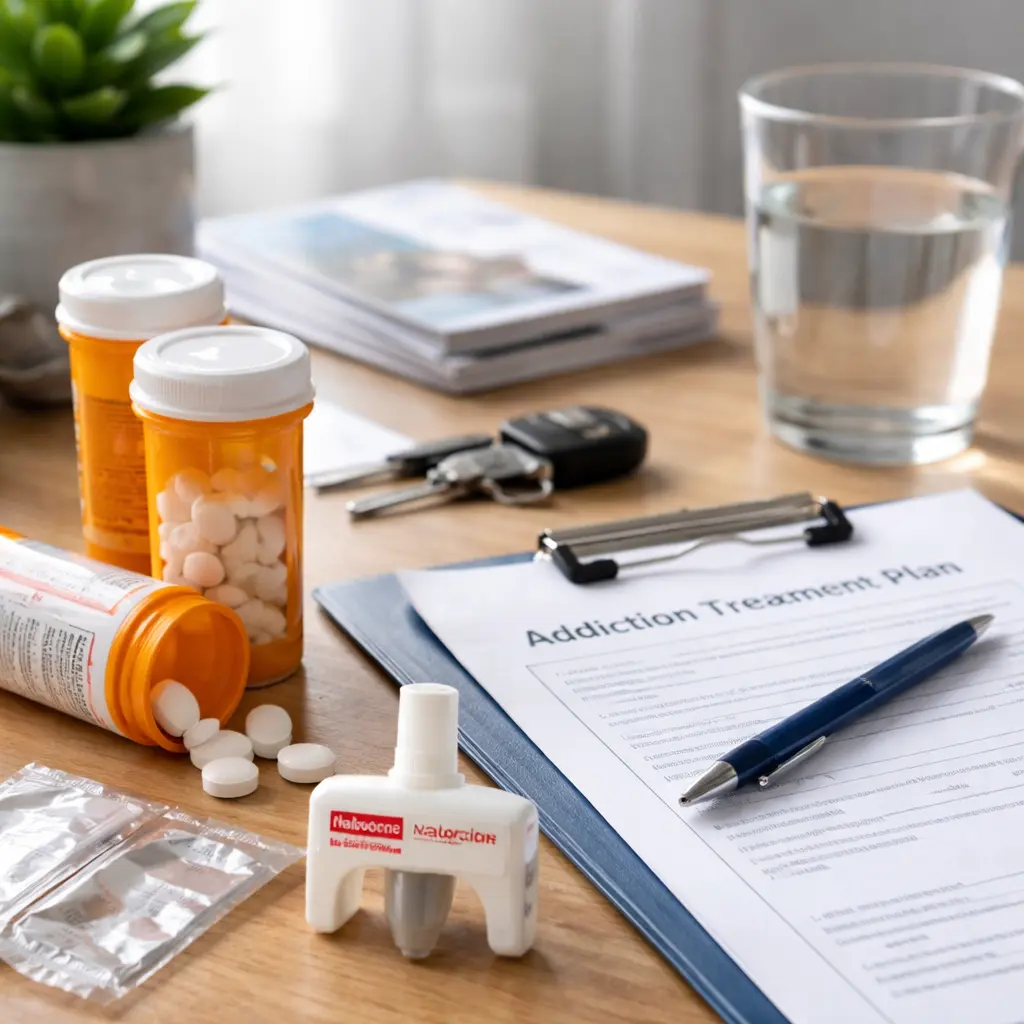
When someone is in active addiction, “getting help” can feel too big to start. However, the right resources can shrink the problem into the next safe step. This is especially true with fentanyl, because the risk of overdose can rise fast and without warning.
This guide is a resource-first roadmap for people living in active addiction and for families who are trying to help. It focuses on what to do today, what to prepare for tomorrow, and how to move from crisis to care with fewer delays. Although fentanyl addiction treatment may include several levels of care, the first priority is safety and a realistic plan you can follow.
If you are worried about immediate danger, treat it like an emergency. Call 911 in the U.S. right away if someone is unresponsive, has slowed breathing, or you cannot wake them. Then, use the steps below to keep things as safe as possible until help arrives.
Active addiction can feel like a constant negotiation: “I’ll stop tomorrow,” “I can handle it,” or “It’s not that bad.” However, when substance use starts driving your decisions, health, or relationships, it is worth treating it like a safety issue, not a willpower test. This guide is an action-focused resource for people who suspect they may be stuck in active addiction and want a clear next step.
Here is one plain-language marker to hold onto: a sign that you may need help with addiction is when you keep using even after you promised yourself you would stop. Likewise, if you are hiding use, planning your day around it, or feeling withdrawal when you try to pause, that pattern often signals risk. Because addiction affects the brain and behavior, support can reduce danger and speed up stabilization.
This article does not diagnose you. Instead, it gives you a practical way to decide what to do today, especially if withdrawal or relapse risk is rising. If you are in immediate danger, call 911.
