
Guide
How to Use an AA 1st Step Worksheet to Work Step One
Joint Commission accredited · In network with most major insurance · Admissions answered 24 hours a day

Published June 8, 2020
Reviewed and updated July 27, 2026
Or see all twelve step worksheets, free to print.
This guide to Step 1 of the 12-step program explains that the foundational principle is admitting powerlessness over alcohol or drugs and recognizing that life has become unmanageable. This step marks the beginning of recovery for those struggling with addiction.
Using printable AA Step 1 worksheets—often referred to as the first step worksheet or AA Step 1 questions—can help individuals reflect deeply on their relationship with substance use. These tools include guided prompts such as “In what ways have I been powerless to my addiction?” and “How has my life become unmanageable due to substance use?” A first step worksheet offers space for journaling and taking a personal inventory, which is essential for progressing through the program. Printable AA step worksheets provide accessible support for newcomers as they begin their recovery journey.
Working Step 1 may also involve peer support, guidance from sponsors, or participation in drug detox programs. For many, beginning with these resources lays the foundation for long-term healing, whether they pursue detox at home or within a professional drug rehab setting.
Step 1 AA Questions & First Step Worksheet Basics
The 12-Step Program is a highly successful recovery program that has been used by individuals worldwide to overcome alcohol and drug addiction. Each step is a principle that is designed to help people who are struggling with addictive behaviors.
In this blog, we’ll provide a basic overview of Step 1 of the 12 Steps, details on how to work Step 1, and 12 step program worksheets and prayers to help you through the process. Although the thought of working through the 12-Step Program can seem daunting, try to remember that you only have to take one step at a time and there is no time limit or deadline. The process looks different for each of us and it’s all about progress at your own rate. When you’re searching online, phrases like “aa 1st step worksheet” or “step 1 worksheet aa” usually refer to the same basic tools for working this first step.
What Is an AA 1st Step Worksheet?
An AA 1st step worksheet is a structured set of questions that helps you describe how alcohol or drugs have affected your life and where things have become unmanageable.
Common AA Step 1 Worksheet Questions
Most AA Step 1 worksheets ask about specific consequences of drinking or using, patterns you notice, and times you tried to control your substance use but couldn’t.
What are the 12 Steps of Alcoholics Anonymous (AA)?
1st Step: We admitted we were powerless over alcohol — that our lives had become unmanageable.
2nd Step: Came to believe that a Power greater than ourselves could restore us to sanity.
4th Step: Made a searching and fearless moral inventory of ourselves.
5th Step: Admitted to God, to ourselves and to another human being the exact nature of our wrongs.
6th Step: Were entirely ready to have God remove all these defects of character.
7th Step 7: Humbly asked Him to remove our shortcomings.
8th Step: Made a list of all persons we had harmed and became willing to make amends to them all.
9th Step: Made direct amends to such people wherever possible, except when to do so would injure them or others.
10th Step: Continued to take personal inventory and when we were wrong promptly admitted it.
11th Step: Sought through prayer and meditation to improve our conscious contact with God, as we understood Him, praying only for knowledge of His will for us and the power to carry that out.
12th Step: Having had a spiritual awakening as the result of these steps, we tried to carry this message to alcoholics, and to practice these principles in all our affairs.
When you’re ready to begin your moral inventory, grab our AA Step 4 worksheet guide.
Once you've worked Step 1, continue with our Step 2 worksheet and tips.
What is the Importance of Step 1 in the 12-Steps for AA?
Step 1 is arguably one of the most important steps in the whole recovery process because it’s the start of a brand new life! Simply walking into a 12-Step meeting or enrolling in a rehab program is a huge part of working Step 1 of the 12-Step Program and is an outward sign that you’ve acknowledged that you need help and that you’re willing to do something about it.
It’s also important to remember that although Step 1 requires us to admit we are powerless to alcohol or drugs, we still have the ability to change our lives. We are all fully capable of working the 12-Step Program, choosing to attend a detox and rehab program, and committing our lives to abstinence from drugs and alcohol.
Clinically, admitting powerlessness aligns with what we know about substance use disorders as chronic, relapsing brain conditions rather than simple failures of willpower.
However, if we choose to put addictive substances into our bodies, then we are powerless to them. Step 1 doesn’t replace medical detox, but it can prepare you emotionally to enter a supervised program and stay engaged with the treatment plan you and your providers create.
A major part of Step 1 is also accepting the responsibility to fully engage in our recovery and be open to living a new life. What does this mean exactly? It means that we follow our sponsor’s suggestions, we do all that is required of us in our rehab program, we are willing to listen, give support, and receive it, and we start viewing our recovery program as an opportunity instead of a chore.
Where we are
Detox centers across Texas
Three locations, each with its own admissions line and its own clinical team. Pick the one nearest you — or call and we will tell you which has a bed tonight.
-
 Inpatient
 Austin, TX
11711 N Lamar Blvd · 78753
- 15 beds
- On-site labs
- 24-hour medical staff
Drug & Alcohol Detox in Austin, TX
-
 Inpatient
 Houston, TX
1019 Ashland St · 77008
- On-site labs
- 24-hour medical staff
Drug Detox Center in Houston, TX
-
 Outpatient
 San Antonio, TX
6707 W Hausman Rd · 78249
- Outpatient detox with scheduled medical visits
- Outpatient treatment
Outpatient Drug & Alcohol Detox in San Antonio
Break Free from Addiction. Detox Safely in Austin Today.
Medically Supervised Detox – Compassionate Care Starts Here.
How Should I Do Step 1 of the 12-Step Program with a Worksheet?
The process of working through each step of the 12-Step Program is highly individualized, but your sponsor, counselor, or an addiction treatment professional can help you through it. If you’re still experiencing intense withdrawal symptoms, cravings, or medical complications, it’s usually safer to focus on stabilizing in detox before diving into detailed Step work. Here are a few things he or she may require of you.
- Get sober. Clearing your body and mind of addictive substances is an excellent place to start if you are new to recovery. Depending on your history of drug or alcohol use and the severity of your addiction, you may need to complete a drug detox program before you can fully engage in a recovery program. Once you are clear-headed and physically stable, you’ll be in a much better place to begin your step work. If alcohol is your main substance, reviewing an alcohol withdrawal timeline can help you understand what to expect during detox.
- Share. Sharing your experience at a 12-Step meeting or in a group setting at rehab is another excellent way to work Step 1. This is often very challenging for people in early recovery because secrecy and lies come much more naturally after months or years of addiction. However, openly sharing your experience with addiction is an incredibly freeing process that allows you to let go of your secrets, move forward with your life, and start healing.
- Write inventory lists. Another way you can work Step 1 is by getting a blank notebook or journal and making inventory lists. Examples could include a consequences list or an unmanageability list. To do this, ask yourself important questions like:
- In what specific ways has my life become unmanageable due to my addiction?
- What consequences have I experienced as a direct result of my drug abuse?
- In what ways have I been powerless to my addiction?
- Am I willing to do whatever it takes to transform my life?
Printable AA 1st Step Worksheets
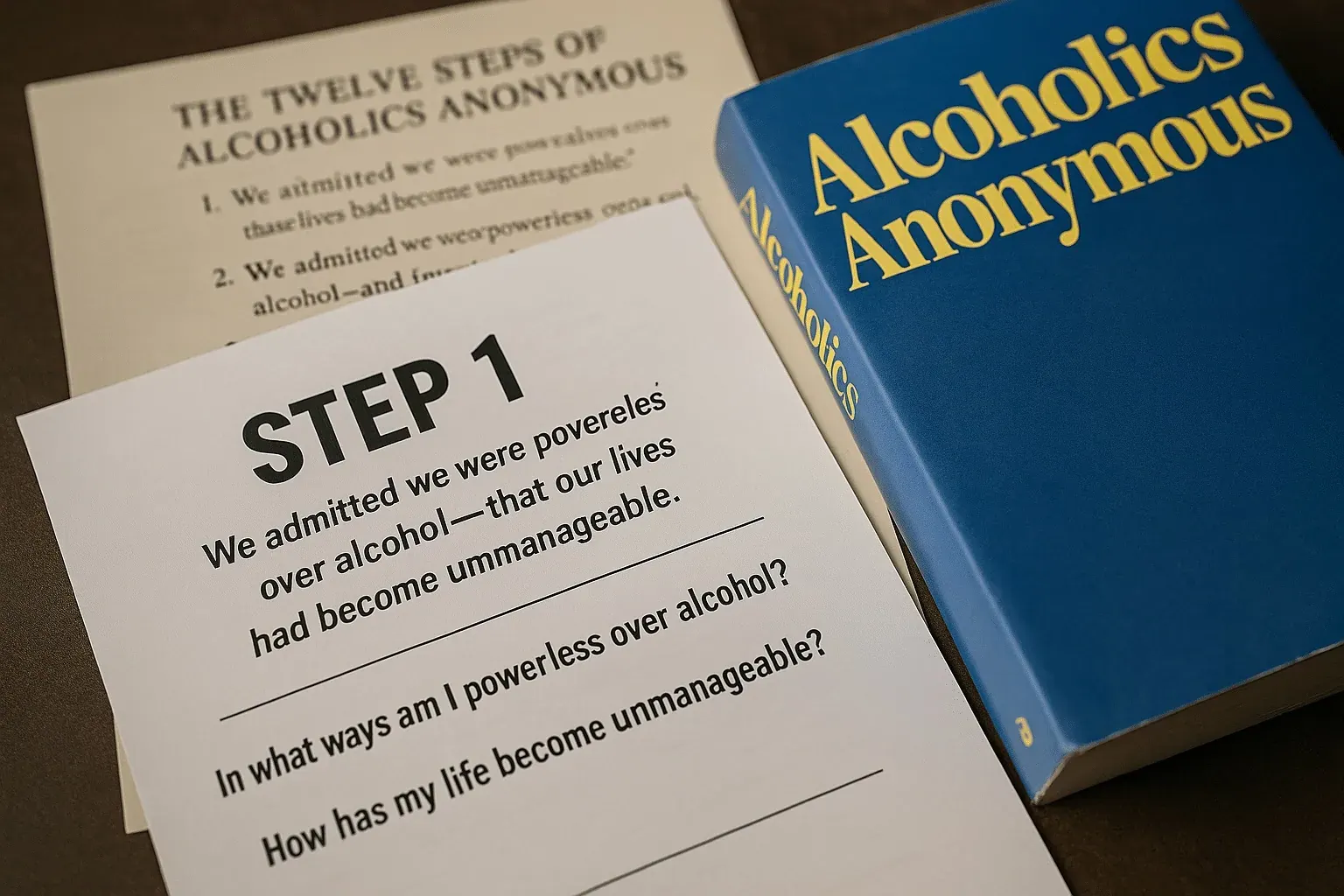
Your sponsor, counselor, or addiction treatment provider is a great resource for 1st step inventory worksheets, however, these printable Print our free Step 1 worksheet from 12Step.org are excellent learning tools as well. A step one worksheet AA members use is simply an Alcoholics Anonymous step one worksheet that helps you put into words how powerlessness and unmanageability show up in your life.
While working through the worksheets, please note that they are designed to help you understand your experience with drugs and alcohol and you are encouraged to be as open and honest as possible. As a result, you may experience a wide range of emotions while you write, and that’s okay. You don’t have to fill out every single blank on each page, but it’s important to discuss the worksheets with your sponsor, counselor, or addiction treatment provider once you are finished. There’s no need to show these worksheets to anyone else once you’re finished. Similar NA 1st step worksheets and NA worksheets step 1 use many of these questions too, so the insight you gain here can support recovery in both AA and NA. These worksheets are educational tools only and are not designed to diagnose a mental health disorder or replace therapy with a licensed professional.
Using Step One Worksheets in NA vs AA
NA 1st step worksheets typically share the same structure as AA versions but focus on “our addiction” and all mood‑altering substances instead of alcohol alone.
Step 1 and AA Recovery Stats
- Studies consistently show that about 50% of individuals who attend AA meetings (or participate through Twelve-Step Facilitation) remain abstinent at 1 year, and this rate remains stable at 3 and 8 years
- A major Cochrane meta-analysis notes that standardized AA/TSF interventions lead to 20–60% higher rates of continuous abstinence compared to other mainstream treatments like CBT or Motivational Enhancement Therapy, especially over the long term.
- While few studies isolate Step 1 individually, attendance at AA meetings—and completing the program from Step 1 onward—is strongly correlated with higher abstinence. Frequent attendance (weekly or more) is associated with better outcomes and a greater likelihood of remaining sober.
- In longitudinal data, individuals who regularly engaged with AA (which includes working through Step 1 and beyond) were about 1.6 times more likely to remain abstinent compared to infrequent participants.
- Addiction relapse is treated similarly to other chronic conditions. The relapse rate for substance use disorders ranges from 40–60%—but declines significantly over time with consistent recovery efforts. You can learn more about timelines for different substances in our guide on how long withdrawal lasts.
Who Can Help Me Work the 1st Step of the 12-Step Program?
Ideally, you will work through the 12 steps with a sponsor and certified addiction treatment professional, but having supplementary support and written guides (like this article) on how to work each step can be very helpful too.
If you want to get sober and you’re ready to start working Step 1 of the 12-Step Program, you’ve landed in a great place! Briarwood Detox offers individually designed detox programs for all addictive substances. Our professional and licensed medical and clinical staff work together to provide a comprehensive and whole-person approach to drug and alcohol detox. This ensures that detox is as safe and as comfortable as possible for you.
Our clients also participate in H&I meetings where they are introduced to the 12-Step Program and can get a head start on connecting with a sponsor. This process can help you gain the confidence you need to continue in your recovery journey and make important connections with other individuals who share similar life experiences. If you’re already thinking ahead, our guide on what comes after detox explains how Step work fits into longer-term treatment and aftercare.
It’s never too late to commit to a life of sobriety. No matter where you are or where you’ve been, we believe you can achieve lasting recovery and maintain a healthy and fulfilling life for yourself. Call (866) 710-7710 to speak with a representative at Briarwood Detox today.
When to Talk to a Professional About Step 1
If Step 1 work brings up intense cravings, self‑harm thoughts, or memories of trauma, that’s a signal to pause and talk with a counselor, sponsor, or medical provider.
Related guides



About the people behind this guide
Anna-Grace Washington
Medical Content Writer
Anna-Grace Washington is a Medical Content Writer for Briarwood Detox Center. She holds a master’s degree in clinical psychology from the University of Texas and brings a strong understanding of behavioral health, addiction recovery, and evidence-based treatment concepts to her writing.
In network with most major insurance
Find your plan and see what detox would cost
Most plans cover medical detox. Coverage varies by plan, so we verify it for you before you commit to anything.


















Don't see your plan? We work with out-of-network benefits and offer self-pay options — (866) 710-7710
- Confidential
- Takes about 2 minutes
- No obligation to admit
- Accredited The Joint Commission
- Rated 4.7 · 183 Google reviews Flourishing Foundations Recovery, now part of Briarwood
- Admissions 24 hours a day